
Prime Rib Recipe. Ah, the majestic prime rib. Just the mention of it conjures images of crackling, golden-brown crust giving way to a succulent, rosy interior, the aroma filling your home with an undeniable promise of culinary triumph. It’s more than just a roast; it’s an event, a centerpiece that elevates any gathering from ordinary to extraordinary. Whether you’re celebrating a milestone birthday, hosting a festive holiday feast, or simply craving an unforgettable dining experience, a perfectly cooked prime rib is the undisputed star. What is it about this cut that captures our hearts and taste buds? Perhaps it’s the inherent richness, the buttery texture, or the sheer indulgence it represents. This particular prime rib recipe is designed to unlock that melt-in-your-mouth perfection, ensuring your creation becomes the stuff of legend, leaving your guests begging for the secret to your incredible prime rib recipe.

Ingredients:
- 7 lb beef prime rib (bone-in)
- 3 1/2 tsp sea salt (divided)
- 1/2 Tbsp black pepper (freshly ground)
- 1 tsp fresh rosemary leaves, minced (from 1 sprig or 1/2 tsp dried rosemary)
- 1/2 tsp fresh thyme leaves, minced (from 1-2 sprigs, or 1/4 tsp dried thyme)
- 6 garlic cloves (finely chopped)
- 3 Tbsp extra light olive oil
Preparing Your Prime Rib Roast
The foundation of any exceptional Prime Rib Recipe is proper preparation. Begin by taking your 7 lb bone-in beef prime rib out of the refrigerator at least 2 to 3 hours before you plan to cook it. This is a crucial step to ensure the roast cooks evenly. A cold roast hitting a hot oven will result in a dramatically different internal temperature between the outside and the center. Allow it to come to room temperature gradually for the best results. Once it has rested, pat the entire surface of the prime rib thoroughly dry with paper towels. This step helps to create a beautiful, crisp crust as the roast cooks, which is a hallmark of a perfectly prepared prime rib.
Next, in a small bowl, combine the aromatics. Mince your fresh rosemary leaves – you’ll need about 1 teaspoon. If you don’t have fresh rosemary, you can substitute 1/2 teaspoon of dried rosemary, but fresh offers a more vibrant flavor. Similarly, mince your fresh thyme leaves, aiming for about 1/2 teaspoon. Again, 1/4 teaspoon of dried thyme can be used as a substitute. Add 6 finely chopped garlic cloves to the herb mixture. The smaller you chop the garlic, the more its flavor will distribute throughout the crust. Finally, add 3 tablespoons of extra light olive oil to this bowl. The olive oil will help the herbs and garlic adhere to the roast and contribute to browning. Mix these ingredients together to form a paste.
Now, it’s time to season the prime rib. Sprinkle 1 teaspoon of your 3 1/2 teaspoons of sea salt evenly over the entire surface of the roast. Follow this with 1/2 tablespoon of freshly ground black pepper. Then, generously rub the herb and garlic paste all over the prime rib, ensuring it’s coated on all sides, including the edges. You want to create a flavorful crust that will develop as it roasts. For the remaining 2 1/2 teaspoons of sea salt, reserve this for later in the cooking process.
The Roasting Process
Preheat your oven to 450°F (230°C). Place the seasoned prime rib, bone-side down, in a roasting pan. The bones act as a natural rack, lifting the roast slightly and promoting more even cooking. It’s also a good idea to place the roast fat-side up, as the fat will render and baste the meat as it cooks, adding moisture and flavor.
The High-Heat Sear
Place the roasting pan with the prime rib into the preheated oven. Sear the roast at this high temperature for 15 minutes. This initial blast of heat is essential for developing that coveted, deep brown crust. After 15 minutes, reduce the oven temperature to 325°F (160°C). Do not open the oven door during this initial searing period.
Low and Slow Cooking
Continue roasting the prime rib at 325°F (160°C). The cooking time will vary depending on the desired level of doneness. As a general guideline, plan for approximately 13-15 minutes per pound for medium-rare. For a 7 lb roast, this would be roughly 1 hour and 30 minutes to 1 hour and 45 minutes. During this phase, about halfway through the estimated cooking time (around the 45-minute mark to 1-hour mark of the low-temperature roasting), it’s time to add the remaining sea salt. Carefully remove the roasting pan from the oven and generously sprinkle the remaining 2 1/2 teaspoons of sea salt over the top of the roast. This second salting helps to further enhance the crust and season the meat more deeply. Return the roast to the oven to finish cooking.
Checking for Doneness and Resting
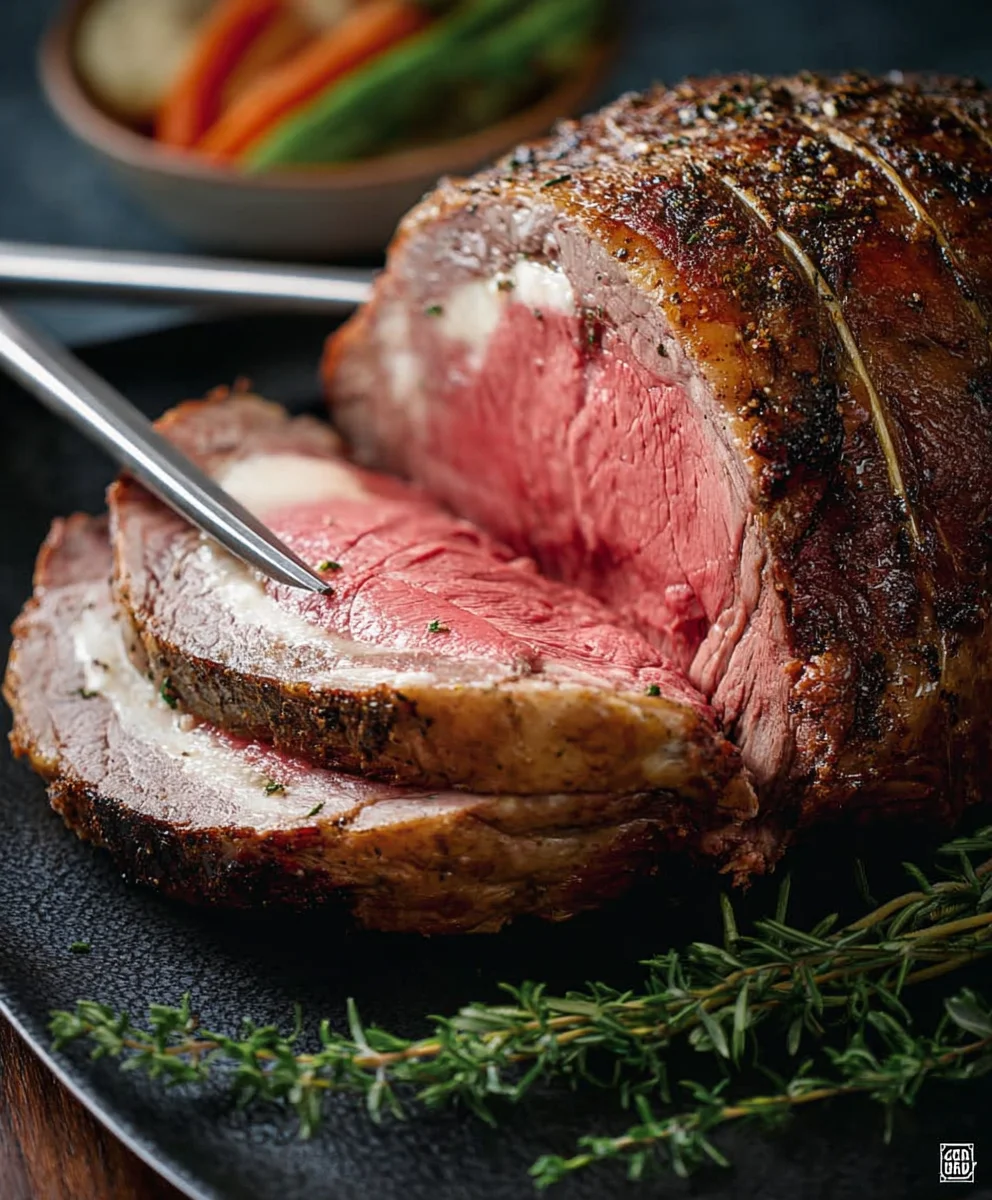
The most reliable way to determine when your prime rib is done is by using an instant-read meat thermometer. Insert the thermometer into the thickest part of the roast, avoiding the bone. For medium-rare, you’re looking for an internal temperature of 130-135°F (54-57°C). For medium, aim for 135-140°F (57-60°C). Remember that the temperature will rise several degrees as the roast rests. Once the roast reaches your desired temperature, carefully remove it from the oven and transfer it to a cutting board. Tent it loosely with aluminum foil and let it rest for at least 20 to 30 minutes. This resting period is absolutely critical. It allows the juices to redistribute throughout the meat, ensuring a tender and moist final product. If you cut into it too soon, all those delicious juices will run out onto the cutting board, leaving you with a dry roast.
Carving and Serving
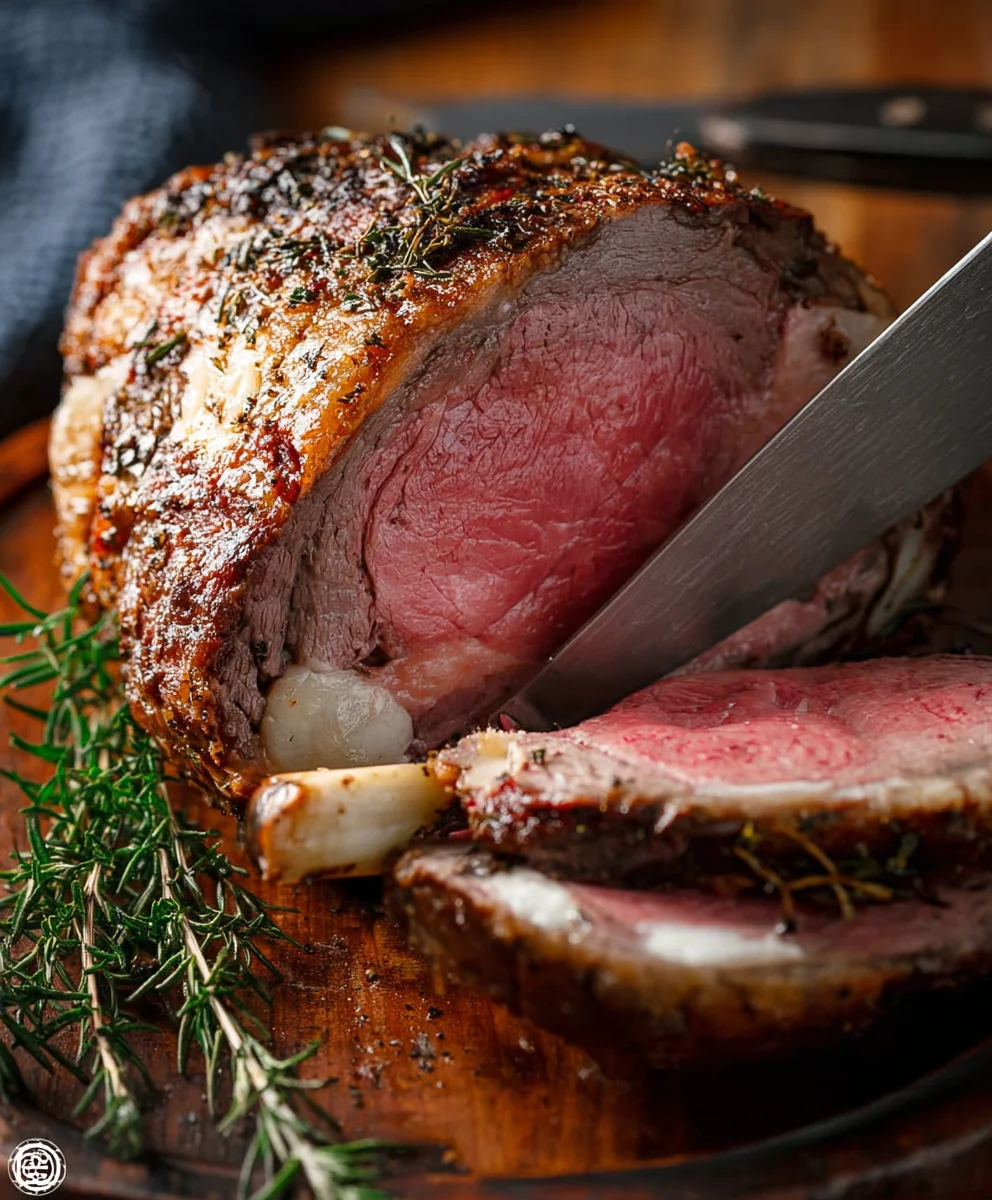
After the resting period, it’s time to carve your masterpiece. Remove the bones from the roast. You can do this by carefully sliding a carving knife between the bones and the meat. Then, slice the prime rib against the grain into thick, juicy slices. Serve immediately with your favorite side dishes. Enjoy the fruits of your labor and this incredible Prime Rib Recipe!
Conclusion:
There you have it – a comprehensive guide to achieving a truly show-stopping Prime Rib Recipe! We’ve covered everything from selecting the perfect cut to mastering the art of seasoning, slow roasting, and resting to ensure an incredibly juicy and flavorful roast every time. The aroma alone will fill your home with a sense of occasion, and the tender, succulent slices will undoubtedly impress your guests. This Prime Rib Recipe is perfect for holiday feasts, special celebrations, or simply when you want to treat yourself to something extraordinary. Don’t be intimidated; with a little care and attention, you’ll be well on your way to prime rib perfection.
For serving, consider classic pairings like roasted root vegetables, creamy mashed potatoes, or a vibrant horseradish sauce. If you’re feeling adventurous, explore variations by incorporating different herb rubs like rosemary and thyme, or even adding a touch of garlic and Dijon mustard to your seasoning. The beauty of this Prime Rib Recipe is its versatility. So gather your ingredients, preheat your oven, and get ready to create a culinary masterpiece you’ll be proud to share. I encourage you to try this recipe and let the delicious results speak for themselves!
Frequently Asked Questions:
Can I make the Prime Rib Recipe ahead of time?
While it’s best enjoyed fresh, you can roast the prime rib ahead of time and gently reheat it. Allow it to come to room temperature for about 30-60 minutes, then warm it in a 300°F (150°C) oven until heated through, being careful not to overcook it. A meat thermometer is your best friend here.
What’s the best way to reheat leftover prime rib?
To reheat leftover prime rib and keep it from drying out, it’s best to use a low oven temperature. Place the slices in a single layer on a baking sheet, add a splash of beef broth or water, cover tightly with foil, and warm in a 300°F (150°C) oven until just heated through. Avoid microwaving if possible, as it can toughen the meat.
The Ultimate Prime Rib Roast Recipe
A foolproof recipe for an incredibly tender and flavorful prime rib roast with a perfect crust.
Ingredients
-
7 lb beef prime rib (bone-in)
-
3 1/2 tsp sea salt (divided)
-
1/2 Tbsp black pepper (freshly ground)
-
1 tsp fresh rosemary leaves, minced
-
1/2 tsp fresh thyme leaves, minced
-
6 garlic cloves (finely chopped)
-
3 Tbsp extra light olive oil
Instructions
-
Step 1
Take the prime rib out of the refrigerator 2-3 hours before cooking to bring it to room temperature. Pat the entire surface thoroughly dry with paper towels. -
Step 2
In a small bowl, combine minced fresh rosemary, minced fresh thyme, finely chopped garlic, and extra light olive oil to form a paste. -
Step 3
Season the roast with 1 teaspoon of sea salt and the black pepper. Generously rub the herb and garlic paste all over the prime rib. -
Step 4
Preheat oven to 450°F (230°C). Place the seasoned prime rib, bone-side down and fat-side up, in a roasting pan. Sear for 15 minutes without opening the oven door. Then, reduce oven temperature to 325°F (160°C). -
Step 5
Continue roasting at 325°F (160°C) for approximately 13-15 minutes per pound. About halfway through the low-temperature roasting, sprinkle the remaining 2 1/2 teaspoons of sea salt over the roast. -
Step 6
Check for doneness with an instant-read thermometer (130-135°F for medium-rare). Remove from oven, tent loosely with foil, and rest for 20-30 minutes before carving.
Important Information
Nutrition Facts (Per Serving)
It is important to consider this information as approximate and not to use it as definitive health advice.
Allergy Information
Please check ingredients for potential allergens and consult a health professional if in doubt.

Leave a Comment