

French Toast Roll-Ups are more than just a breakfast – they’re a delightful culinary adventure that transforms a classic into something utterly enchanting. Forget the ordinary; these sweet, golden spirals are designed to spark joy and add a touch of whimsy to your morning routine. Why do people adore them so much? It’s the perfect marriage of textures and flavors: the tender, eggy embrace of French toast coating a warm, pillowy interior, all rolled up into a convenient and utterly irresistible package. They’re remarkably versatile, allowing for a playground of fillings – from classic cinnamon sugar and fresh berries to decadent chocolate chips or a drizzle of creamy peanut butter. What truly sets these French Toast Roll-Ups apart is their playful presentation and the sheer delight they bring to every bite, making them a guaranteed hit with kids and adults alike. Prepare to be amazed by how simple ingredients can create such an extraordinary experience.

Ingredients:
- 10 slices of your favorite bread (white, challah, or brioche work wonderfully for French Toast Roll-Ups)
- 10 fully cooked sausage links (cocktail-sized or standard-sized, cut in half lengthwise if they are large)
- 3 large eggs
- ½ cup whole milk
- 3 tablespoons granulated sugar
- ½ teaspoon ground cinnamon
- 1 teaspoon vanilla extract
- 1 tablespoon all-purpose flour
- Butter for greasing the pan
Preparing the Sausage and Bread
The first step to creating these delightful French Toast Roll-Ups is to get our core components ready. Begin by taking your 10 fully cooked sausage links. If you are using larger sausage links, you’ll want to cut them in half lengthwise. This ensures that each roll-up gets a nice, even distribution of sausage. The goal here is to have a piece of sausage that will fit neatly within the rolled bread.
Next, we’ll prepare the bread. Take each of your 10 slices of bread. Using a rolling pin, gently flatten each slice. This is a crucial step for making sure the bread rolls up smoothly without tearing. You want to press down firmly but not so aggressively that you break the bread’s structure. Aim for a thin, pliable slice. Some people prefer to trim the crusts off the bread at this stage, and that’s perfectly fine! It gives a more uniform roll, but it’s not strictly necessary if you enjoy the texture of the crust. Lay your flattened bread slices out on a clean surface, ready for the next stage.
Crafting the French Toast Batter
Now, let’s move on to the star of the show: the French toast batter. In a shallow dish or a pie plate, crack your 3 large eggs. Whisk them thoroughly until the yolks and whites are completely combined and there are no streaks of either. This ensures an even consistency for the batter.
To the whisked eggs, add ½ cup of whole milk. The whole milk contributes to a richer, creamier batter, which in turn makes for more decadent French Toast Roll-Ups. Next, sprinkle in 3 tablespoons of granulated sugar. This sugar will not only add sweetness but also help the roll-ups achieve a lovely golden-brown caramelization as they cook. Follow this with ½ teaspoon of ground cinnamon. Cinnamon is the quintessential French toast spice, adding warmth and that unmistakable aroma. Finally, stir in 1 teaspoon of vanilla extract. Vanilla extract enhances all the other flavors and adds a subtle, comforting sweetness.
Once you have all the wet ingredients and spices in the dish, whisk everything together again until well combined. Now for a little secret ingredient to help the batter adhere to the bread and prevent sogginess: 1 tablespoon of all-purpose flour. Whisk this flour into the egg mixture until it’s fully incorporated and there are no lumps. The batter should be smooth and slightly thickened.
Assembling the French Toast Roll-Ups
With your bread flattened and your batter perfectly mixed, it’s time for assembly. Take one flattened slice of bread and place one prepared sausage link (or half-link, depending on size) at one end of the bread slice. Carefully begin to roll the bread tightly around the sausage, starting from the end with the sausage. The goal is to create a compact cylinder. As you roll, the flattened bread should hold its shape around the sausage. If the bread is slightly dry and not sticking, you can dip your finger in water and lightly dampen the edge of the bread before finishing the roll. This will help it seal. Repeat this process for all 10 bread slices and sausage links. You should now have 10 beautifully rolled sausage logs.
The Dipping and Cooking Process
Now comes the magical transformation. Take each of your assembled bread-and-sausage rolls and dip them into the prepared French toast batter. Make sure to coat each side evenly. You don’t want to soak them for too long, as this can make the bread too soggy. A quick dip on all sides should suffice. Let any excess batter drip back into the dish for a moment before proceeding.
Prepare a non-stick skillet or griddle over medium heat. Add a generous amount of butter to the pan. You want enough butter to lightly coat the surface and prevent sticking, and also to contribute to that lovely golden-brown crispiness. Once the butter is melted and shimmering (but not burning), carefully place the battered roll-ups into the hot skillet. Be sure not to overcrowd the pan; cook them in batches if necessary to ensure they cook evenly on all sides.
Achieving Golden Perfection
Allow the French Toast Roll-Ups to cook for about 2-3 minutes per side. You are looking for a beautiful golden-brown color to develop on all surfaces. As they cook, use tongs to gently turn them, ensuring even browning and a cooked-through interior. You’ll see the batter form a lovely crust. Listen for a gentle sizzle, which indicates they are cooking nicely. If the heat is too high, the outside might brown too quickly before the inside is heated through. If this happens, reduce the heat slightly. The internal sausage should be warm and the bread should be tender and slightly crisp on the outside.
Once they have achieved a delightful golden-brown hue on all sides and are heated through, remove them from the skillet and place them on a plate lined with paper towels to absorb any excess butter. This will help maintain their crispiness. Serve them immediately while they are warm and delicious. These French Toast Roll-Ups are fantastic on their own, but you can also serve them with your favorite toppings like maple syrup, powdered sugar, or even a dollop of whipped cream for an extra treat. Enjoy the delightful combination of sweet, savory, and perfectly cooked French toast!

Conclusion:
And there you have it – a simple yet incredibly satisfying way to elevate your breakfast or brunch game with these delightful French Toast Roll-Ups! We’ve walked through the easy steps to transform humble bread into sweet, cinnamon-sugar-dusted spirals of pure joy. The beauty of this recipe lies in its versatility; it’s a fantastic canvas for your culinary creativity. Whether you’re looking for a quick weeknight treat or a show-stopping addition to a weekend spread, these French Toast Roll-Ups are sure to be a hit.
For serving, I highly recommend a generous drizzle of maple syrup, a dollop of whipped cream, or even some fresh berries for a burst of freshness. They’re also delicious dusted with a little powdered sugar for an elegant finish. Don’t be afraid to experiment with variations! You could easily add a sprinkle of chocolate chips or a smear of fruit jam inside before rolling for an extra layer of flavor. I hope you enjoy making and savoring these French Toast Roll-Ups as much as I do!
Frequently Asked Questions:
What kind of bread is best for French Toast Roll-Ups?
While most types of bread will work, slightly stale or day-old bread is ideal. It holds its shape better when rolled and soaked, preventing it from becoming too soggy. Brioche, challah, or even a good quality white bread are excellent choices that soak up the custard beautifully.
Can I make French Toast Roll-Ups ahead of time?
You can prepare the batter and have your toppings ready in advance. However, for the best texture, it’s recommended to assemble and cook the French Toast Roll-Ups just before serving. If you have leftovers, they can be stored in an airtight container in the refrigerator for up to two days and reheated gently in a toaster oven or skillet.
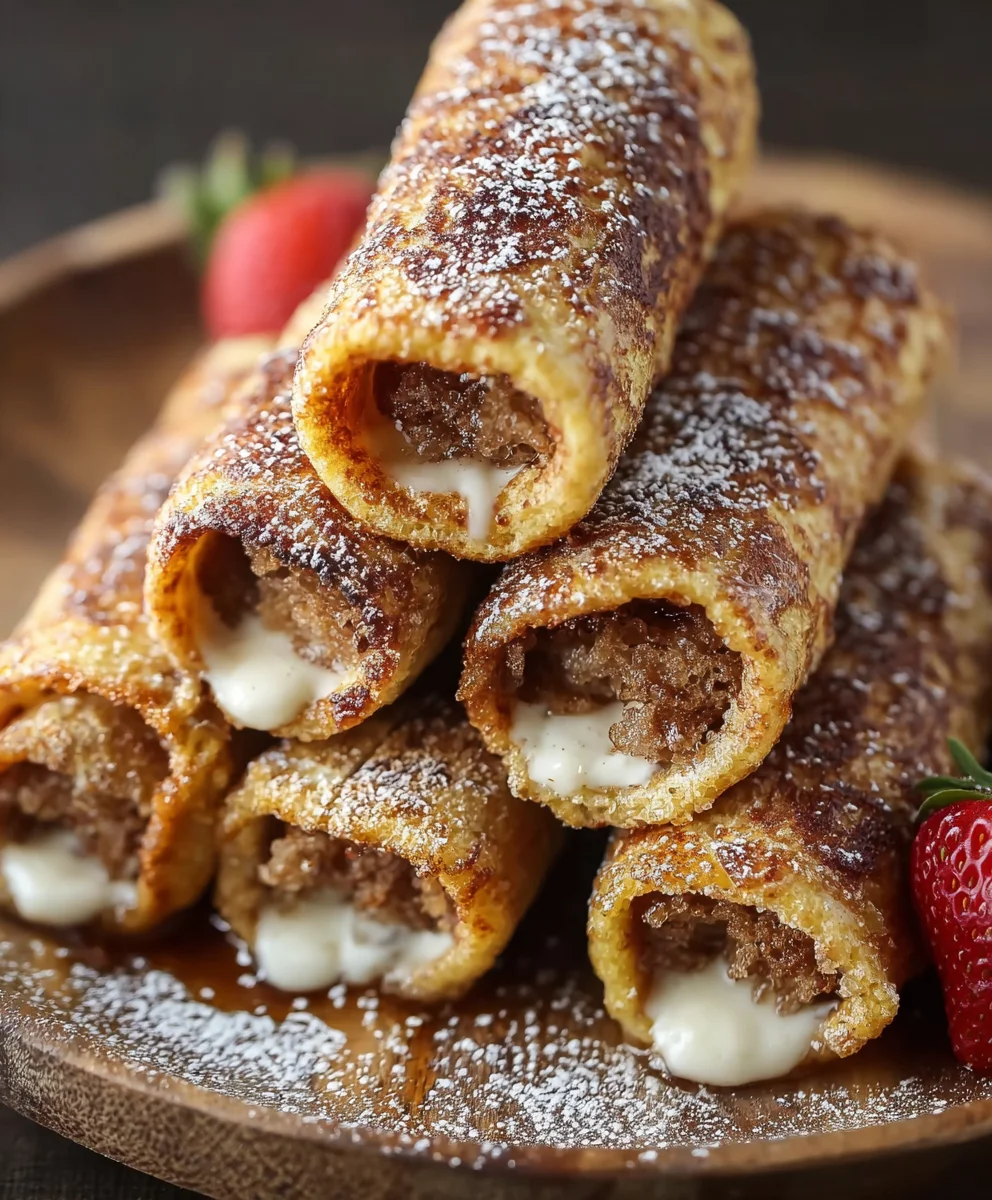
Easy French Toast Roll-Ups
A fun and delicious breakfast treat where savory sausage is rolled in flattened bread, dipped in a sweet cinnamon-vanilla batter, and cooked to golden perfection.
Ingredients
-
10 slices of your favorite bread (white, challah, or brioche)
-
10 fully cooked beef links
-
3 large eggs
-
½ cup whole milk
-
3 tablespoons granulated sugar
-
½ teaspoon ground cinnamon
-
1 teaspoon vanilla extract
-
1 tablespoon all-purpose flour
-
Butter for greasing the pan
Instructions
-
Step 1
Prepare the bread by gently flattening each slice with a rolling pin until thin and pliable. Trim crusts if desired. Prepare the beef links by cutting large ones in half lengthwise. -
Step 2
In a shallow dish, whisk together eggs, whole milk, granulated sugar, ground cinnamon, and vanilla extract until well combined. -
Step 3
Whisk 1 tablespoon of all-purpose flour into the egg mixture until smooth. This helps the batter adhere and prevents sogginess. -
Step 4
Place a prepared beef link at one end of a flattened bread slice and tightly roll the bread around the sausage. Lightly dampen the edge with water to seal if needed. Repeat for all 10. -
Step 5
Dip each roll-up into the French toast batter, coating all sides evenly. Let excess batter drip off. -
Step 6
Melt butter in a non-stick skillet or griddle over medium heat. Cook the battered roll-ups for 2-3 minutes per side, turning to ensure even golden-brown color and cooked-through interior. Cook in batches if necessary. -
Step 7
Remove from skillet and drain on paper towels. Serve warm with your favorite toppings like maple syrup or powdered sugar.
Important Information
Nutrition Facts (Per Serving)
It is important to consider this information as approximate and not to use it as definitive health advice.
Allergy Information
Please check ingredients for potential allergens and consult a health professional if in doubt.



Leave a Comment