
Prime Rib Recipe. That’s a phrase that evokes images of succulent, perfectly roasted meat, a centerpiece worthy of any special occasion, and an aroma that promises pure indulgence. For many of us, a truly exceptional prime rib recipe isn’t just about a meal; it’s about creating memories, celebrating milestones, or simply treating ourselves to something extraordinary. What is it about this cut of beef that captures our hearts and palates so completely? It’s the incredible tenderness, the rich, buttery flavor, and that iconic, beautifully rendered crust that gives way to a melt-in-your-mouth interior. This particular Prime Rib Recipe we’re diving into today elevates those beloved qualities to a whole new level. We’re talking about unlocking that deep, savory essence, achieving that perfect medium-rare blush, and ensuring every slice is an absolute triumph. Get ready to impress yourself and everyone at your table with this foolproof guide to the ultimate prime rib.

Ingredients:
- 7 lb beef prime rib (bone-in)
- 3 1/2 tsp sea salt (divided)
- 1/2 Tbsp black pepper (freshly ground)
- 1 tsp fresh rosemary leaves, minced (from 1 sprig or 1/2 tsp dried rosemary)
- 1/2 tsp fresh thyme leaves, minced (from 1-2 sprigs, or 1/4 tsp dried thyme)
- 6 garlic cloves (finely chopped)
- 3 Tbsp extra light olive oil
Preparing the Prime Rib
The foundation of a truly spectacular Prime Rib Recipe lies in the preparation. Before we even think about the oven, it’s crucial to get the beef ready. Take your 7 lb bone-in beef prime rib out of the refrigerator about 2 to 3 hours before you plan to start cooking. This resting period is absolutely vital for ensuring even cooking. A cold roast will cook unevenly, leaving the exterior overdone and the interior potentially undercooked, or vice versa. Allowing it to come to room temperature helps the heat penetrate the thick cut of meat more uniformly.
While the prime rib is resting, let’s prepare the flavorful rub that will create that delicious crust. In a small bowl, combine 2 teaspoons of the sea salt with the 1/2 tablespoon of freshly ground black pepper. Add the minced fresh rosemary leaves (if using dried, ensure it’s finely ground for better distribution) and the minced fresh thyme leaves (again, dried should be finely ground). Finally, add the 6 finely chopped garlic cloves to this dry mixture. This blend of aromatics will infuse the roast with incredible flavor as it cooks.
Now, we need to bring this rub to life and create a paste. Drizzle the 3 tablespoons of extra light olive oil over the dry spice and herb mixture. Use a fork or a small spoon to mix everything together thoroughly until you form a thick, aromatic paste. The olive oil will help the rub adhere to the meat and also contribute to a beautiful, browned crust. If you find the paste a little too dry, you can add another teaspoon of olive oil, but be careful not to make it too wet, as it might drip off during cooking.
Next, it’s time to generously coat the prime rib with this prepared rub. Place the prime rib on a sturdy cutting board or a clean surface. Using your hands (which is the best way to ensure even coverage), firmly press the herb and garlic paste all over the exterior of the roast. Make sure to get into all the nooks and crannies, covering the top, sides, and even the bottom of the roast. Don’t be shy with the rub; a good coating is essential for developing that rich flavor and appealing crust. Once the entire roast is coated, sprinkle the remaining 1 1/2 teaspoons of sea salt evenly over the top and sides of the seasoned roast. This final sprinkle of salt will enhance the overall savoriness and help draw out moisture for that desirable crispy exterior.
Roasting the Prime Rib
Now that our magnificent prime rib is prepped and seasoned, it’s time to move to the oven. Preheat your oven to a high temperature, specifically 450°F (230°C). This initial high heat is crucial for searing the outside of the roast, creating that mouthwatering brown crust that we worked so hard to achieve with our rub. Place the seasoned prime rib, bone-side down, in a roasting pan. Using a rack inside the roasting pan is highly recommended. The rack allows air to circulate around the roast, promoting even cooking and preventing the bottom from steaming.
Once your oven has reached the set temperature of 450°F (230°C), carefully place the roasting pan with the prime rib into the hot oven. Allow the roast to cook at this high temperature for 15 minutes. This initial blast of heat is key to initiating the searing process. After 15 minutes, reduce the oven temperature to 325°F (160°C). This lower temperature will allow the interior of the prime rib to cook through gently and evenly, without burning the exterior that we just seared.
Continue to roast the prime rib at 325°F (160°C). The general guideline for cooking time is approximately 13 to 15 minutes per pound for rare, 16 to 18 minutes per pound for medium-rare, and 20 to 22 minutes per pound for medium. For our 7 lb prime rib, this means a roasting time of roughly 1 hour and 30 minutes to 1 hour and 50 minutes for medium-rare. The most accurate way to determine doneness is by using a meat thermometer. Insert the thermometer into the thickest part of the roast, avoiding the bone. For a perfect medium-rare, aim for an internal temperature of 120-125°F (49-52°C). For medium, aim for 130-135°F (54-57°C). Remember that the temperature will rise another 5-10 degrees as the roast rests.
Resting and Carving the Prime Rib
This step is arguably as important as the roasting itself. Once your prime rib has reached the desired internal temperature, carefully remove the roasting pan from the oven. Transfer the prime rib from the roasting pan to a clean cutting board. Tent the roast loosely with aluminum foil. This tenting is crucial for allowing the juices to redistribute throughout the meat. If you were to carve it immediately, all those delicious juices would run out onto the cutting board, leaving you with a dry roast. Let the prime rib rest for at least 20 to 30 minutes. For a roast of this size, I often let it rest for closer to 40 minutes to ensure optimal juiciness.
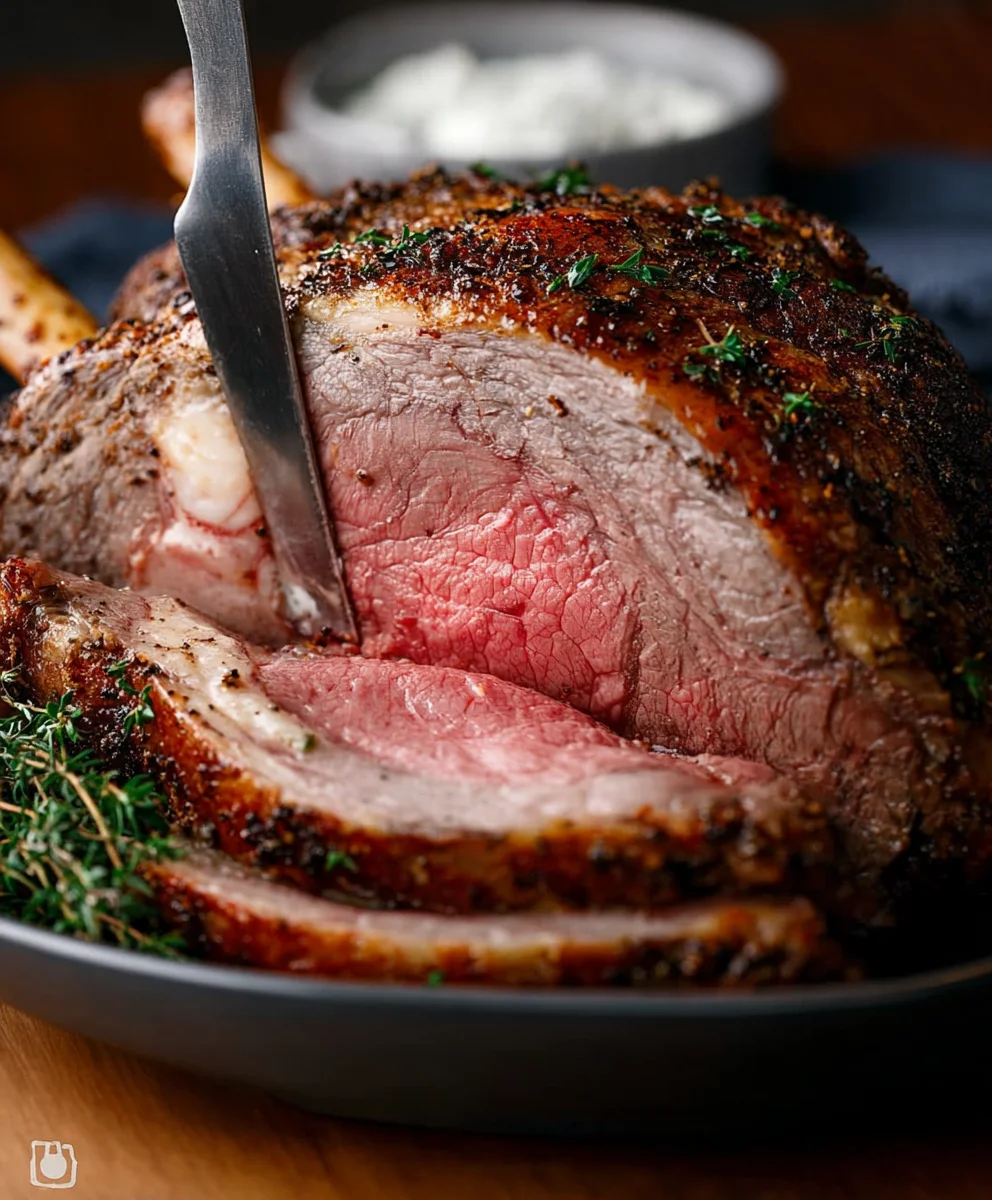
After the resting period, it’s time to carve. Place the rested prime rib on the cutting board, bone-side down. You can use a sharp carving knife to separate the meat from the bones by running the knife along the ribs. Then, slice the prime rib against the grain into your desired thickness. Thicker slices are generally preferred to showcase the beautiful pink interior. Arrange the carved slices on a warm platter and serve immediately with any pan juices or your favorite side dishes.
Conclusion:
And there you have it – your guide to creating a truly spectacular Prime Rib Recipe! We’ve walked through each step, from selecting the perfect cut to achieving that ideal sear and tender interior. The aroma alone is enough to make any occasion feel special. This recipe is all about celebrating quality ingredients and the joy of a perfectly roasted centerpiece. Don’t be intimidated; with a little patience and attention to detail, you’ll be serving up restaurant-quality prime rib in your own home. Think of the impressed faces around your table! I encourage you to try this yourself and experience the delicious rewards.
For serving, this impressive roast shines on its own, but it’s also fantastic alongside classic accompaniments like creamy mashed potatoes, roasted root vegetables, or a simple green salad. A rich red wine or a hearty gravy would be perfect pairings.
Don’t be afraid to explore variations! You can experiment with different herb rubs, like rosemary and thyme, or add a touch of garlic powder for an extra punch of flavor. If you’re feeling adventurous, consider a peppercorn crust for a more robust taste.
Frequently Asked Questions:
Q: How do I ensure my prime rib isn’t overcooked?
A: The key is to use a meat thermometer! Insert it into the thickest part of the roast, away from any bone. For medium-rare, aim for an internal temperature of 120-125°F (49-52°C) before resting. Remember, the temperature will rise a few degrees as it rests.
Q: Can I prepare this prime rib recipe ahead of time?
A: While the entire roast is best enjoyed fresh, you can prepare your herb rub and allow the roast to come to room temperature for an extended period before cooking. This helps with even cooking. Leftovers can be sliced and reheated gently in a low oven or skillet.
Q: What if I don’t have a cast-iron skillet?
A: No worries! A heavy-bottomed oven-safe skillet or even a sturdy baking sheet will work for searing. Just ensure it can withstand high oven temperatures for the initial roasting phase.
Best Prime Rib Recipe-Juicy Tender Beef Perfection
A foolproof recipe for achieving juicy, tender, and perfectly cooked prime rib with a delicious, flavorful crust.
Ingredients
-
7 lb beef prime rib (bone-in)
-
3 1/2 tsp sea salt (divided)
-
1/2 Tbsp black pepper (freshly ground)
-
1 tsp fresh rosemary leaves, minced
-
1/2 tsp fresh thyme leaves, minced
-
6 garlic cloves (finely chopped)
-
3 Tbsp extra light olive oil
Instructions
-
Step 1
Remove prime rib from refrigerator 2-3 hours before cooking to reach room temperature for even cooking. -
Step 2
In a small bowl, combine 2 tsp sea salt, black pepper, minced rosemary, minced thyme, and chopped garlic. Add olive oil to form a thick paste. -
Step 3
Generously coat the entire prime rib with the herb and garlic paste, pressing firmly. Sprinkle remaining 1 1/2 tsp sea salt evenly over the roast. -
Step 4
Preheat oven to 450°F (230°C). Place prime rib bone-side down in a roasting pan, preferably on a rack. Roast for 15 minutes. -
Step 5
Reduce oven temperature to 325°F (160°C) and continue roasting for approximately 13-15 minutes per pound for rare, 16-18 minutes per pound for medium-rare, or 20-22 minutes per pound for medium. Aim for an internal temperature of 120-125°F (49-52°C) for medium-rare. -
Step 6
Remove roast from oven, transfer to a cutting board, and tent loosely with foil. Let rest for at least 20-30 minutes (up to 40 minutes for this size) to allow juices to redistribute. -
Step 7
Carve the prime rib against the grain into desired thickness slices and serve immediately.
Important Information
Nutrition Facts (Per Serving)
It is important to consider this information as approximate and not to use it as definitive health advice.
Allergy Information
Please check ingredients for potential allergens and consult a health professional if in doubt.
Leave a Comment