
Reverse Sear Prime Rib: Prepare to be amazed! Imagine sinking your teeth into a perfectly cooked prime rib, boasting a deeply browned, flavorful crust and a melt-in-your-mouth, rosy pink interior from edge to edge. Sounds divine, doesn’t it? This isn’t just a dream; it’s the reality you can achieve with the reverse sear method.
Prime rib, also known as standing rib roast, has long been a centerpiece of celebratory meals, particularly during the holidays. Its impressive size and rich flavor make it a showstopper, a symbol of abundance and togetherness. While traditionally roasted at high temperatures, the reverse sear technique offers a modern twist, ensuring unparalleled evenness and tenderness.
So, why is reverse sear prime rib so beloved? It’s simple: the results are consistently spectacular. The low and slow cooking process allows the roast to reach the perfect internal temperature without overcooking the outer layers. This eliminates the dreaded gray band that often plagues traditionally roasted prime rib. The final sear, whether in a screaming hot pan or under a broiler, creates that irresistible crust that seals in all the juices and adds a burst of flavor. The result is a prime rib that is incredibly tender, juicy, and flavorful a true culinary masterpiece. I’m excited to share my foolproof method with you, so you can impress your family and friends with this unforgettable dish!

Ingredients:
- For the Prime Rib:
- 1 (4-6 pound) bone-in prime rib roast, about 3-4 ribs
- 2 tablespoons kosher salt
- 1 tablespoon freshly ground black pepper
- 2 tablespoons garlic powder
- 1 tablespoon onion powder
- 1 tablespoon dried rosemary, crushed
- 1 tablespoon dried thyme
- 2 tablespoons olive oil
- For the Au Jus (Optional):
- 2 tablespoons olive oil
- 1 large onion, chopped
- 2 carrots, chopped
- 2 celery stalks, chopped
- 4 cloves garlic, minced
- 4 cups beef broth
- 1 cup dry red wine (optional)
- 2 tablespoons Worcestershire sauce
- 1 tablespoon cornstarch (mixed with 2 tablespoons cold water)
- Salt and pepper to taste
- For the Horseradish Cream Sauce (Optional):
- 1 cup sour cream
- 1/4 cup prepared horseradish, or more to taste
- 1 tablespoon lemon juice
- 1/2 teaspoon salt
- 1/4 teaspoon black pepper
- 1 tablespoon chopped fresh chives (optional)
Preparing the Prime Rib:
- Dry Brine the Roast: This is crucial for a flavorful and tender prime rib. At least 24 hours, and up to 72 hours, before you plan to cook the roast, pat it completely dry with paper towels. This step is essential for achieving a good sear. Generously season the entire roast with kosher salt. Don’t be shy! You want to create a dry brine that will penetrate the meat. Place the roast on a wire rack set inside a baking sheet. This allows air to circulate around the roast. Refrigerate uncovered for 24-72 hours.
- Prepare the Spice Rub: In a small bowl, combine the black pepper, garlic powder, onion powder, dried rosemary, and dried thyme. Mix well to ensure all the spices are evenly distributed.
- Season the Roast: Remove the prime rib from the refrigerator at least 3 hours before cooking. This allows the roast to come closer to room temperature, which promotes more even cooking. Pat the roast dry again with paper towels. This is important even after the dry brining process. Rub the olive oil all over the roast, ensuring it is evenly coated. Then, generously sprinkle the spice rub over the entire roast, pressing it gently into the meat so it adheres well.
Reverse Sear Cooking Process:
- Preheat the Oven: Preheat your oven to 250°F (120°C). This low temperature is key to the reverse sear method, allowing the roast to cook evenly and gently.
- Roast the Prime Rib: Place the seasoned prime rib roast on the wire rack inside the baking sheet. Insert a meat thermometer into the thickest part of the roast, being careful not to touch any bones. Roast in the preheated oven until the internal temperature reaches 120°F (49°C) for rare, 125°F (52°C) for medium-rare, or 130°F (54°C) for medium. The cooking time will vary depending on the size of your roast, but it typically takes about 2-3 hours. Use the meat thermometer as your guide, not the clock.
- Rest the Roast: Once the roast reaches your desired internal temperature, remove it from the oven. Tent it loosely with foil and let it rest for at least 30 minutes. This resting period is crucial, as it allows the juices to redistribute throughout the meat, resulting in a more tender and flavorful roast. Don’t skip this step!
- Sear the Prime Rib: About 15 minutes before the resting time is up, preheat a large cast-iron skillet (or any heavy-bottomed skillet) over high heat until it is smoking hot. You can also use your grill for this step if you prefer. If using a skillet, add 1 tablespoon of olive oil to the skillet. Carefully place the rested prime rib roast in the hot skillet and sear on all sides, including the ends, for about 2-3 minutes per side, until a deep, golden-brown crust forms. Use tongs to carefully rotate the roast and sear each side evenly.
- Final Rest (Optional): After searing, you can let the roast rest for another 10 minutes before carving, but it’s not absolutely necessary. The initial rest is the most important.
Making the Au Jus (Optional):
- Sauté the Vegetables: While the prime rib is resting, prepare the au jus. In a large saucepan or Dutch oven, heat the olive oil over medium heat. Add the chopped onion, carrots, and celery and cook until softened, about 8-10 minutes.
- Add Garlic and Aromatics: Add the minced garlic and cook for another minute, until fragrant.
- Deglaze the Pan: If using, pour in the dry red wine and scrape up any browned bits from the bottom of the pan. This adds a lot of flavor to the au jus. Let the wine reduce slightly, about 2-3 minutes.
- Add Broth and Worcestershire Sauce: Pour in the beef broth and add the Worcestershire sauce. Bring to a simmer and cook for at least 30 minutes, or up to an hour, to allow the flavors to meld. The longer it simmers, the richer the flavor will be.
- Strain the Au Jus: Strain the au jus through a fine-mesh sieve into a clean saucepan, discarding the solids.
- Thicken the Au Jus (Optional): If you prefer a thicker au jus, whisk together the cornstarch and cold water in a small bowl to create a slurry. Slowly whisk the slurry into the simmering au jus and cook until thickened, about 1-2 minutes.
- Season to Taste: Season the au jus with salt and pepper to taste. Keep warm until ready to serve.
Making the Horseradish Cream Sauce (Optional):
- Combine Ingredients: In a medium bowl, combine the sour cream, prepared horseradish, lemon juice, salt, and pepper.
- Mix Well: Mix well until all ingredients are thoroughly combined.
- Adjust Seasoning: Taste and adjust the seasoning as needed. Add more horseradish for a stronger flavor, or more lemon juice for a brighter taste.
- Chill: Cover and chill in the refrigerator for at least 30 minutes to allow the flavors to meld.
- Garnish (Optional): Before serving, stir in the chopped fresh chives, if desired.
Carving and Serving:
- Carve the Prime Rib: Place the prime rib roast on a cutting board with the bones facing down. Using a sharp carving knife, slice the roast against the grain into 1/2-inch thick slices.
- Serve: Arrange the sliced prime rib on a serving platter. Serve immediately with the au jus and horseradish cream sauce, if desired.
- Enjoy! This reverse sear prime rib is perfect for special occasions and holidays. Enjoy the delicious, tender, and flavorful results!
Tips for Success:
- Use a Meat Thermometer: A reliable meat thermometer is essential for achieving the perfect level of doneness. Don’t rely on cooking times alone.
- Don’t Overcook: Prime rib is best served rare to medium-rare. Overcooking will result in a dry and tough roast.
- Resting is Key: Don’t skip the resting periods! They are crucial for a tender and juicy roast.
- Sear for Flavor: The searing step is important for developing a rich, flavorful crust. Make sure your skillet is hot enough before searing.
- Adjust Seasoning: Taste and adjust the seasoning of the au jus and horseradish cream sauce to your liking.
Variations:
- Herb Crust: For an even more flavorful crust, add chopped fresh herbs like parsley, sage, and rosemary to the spice rub.
- Garlic Herb Butter: Rub the prime rib with a mixture of softened butter, minced garlic, and chopped fresh herbs before roasting.
- Smoked Prime Rib: For a smoky flavor, smoke the prime rib on a smoker at 225°F (107°C) until it reaches the desired internal temperature, then sear it as directed.
- Different Au Jus Flavors: Experiment with different flavors in the au jus, such
Conclusion:
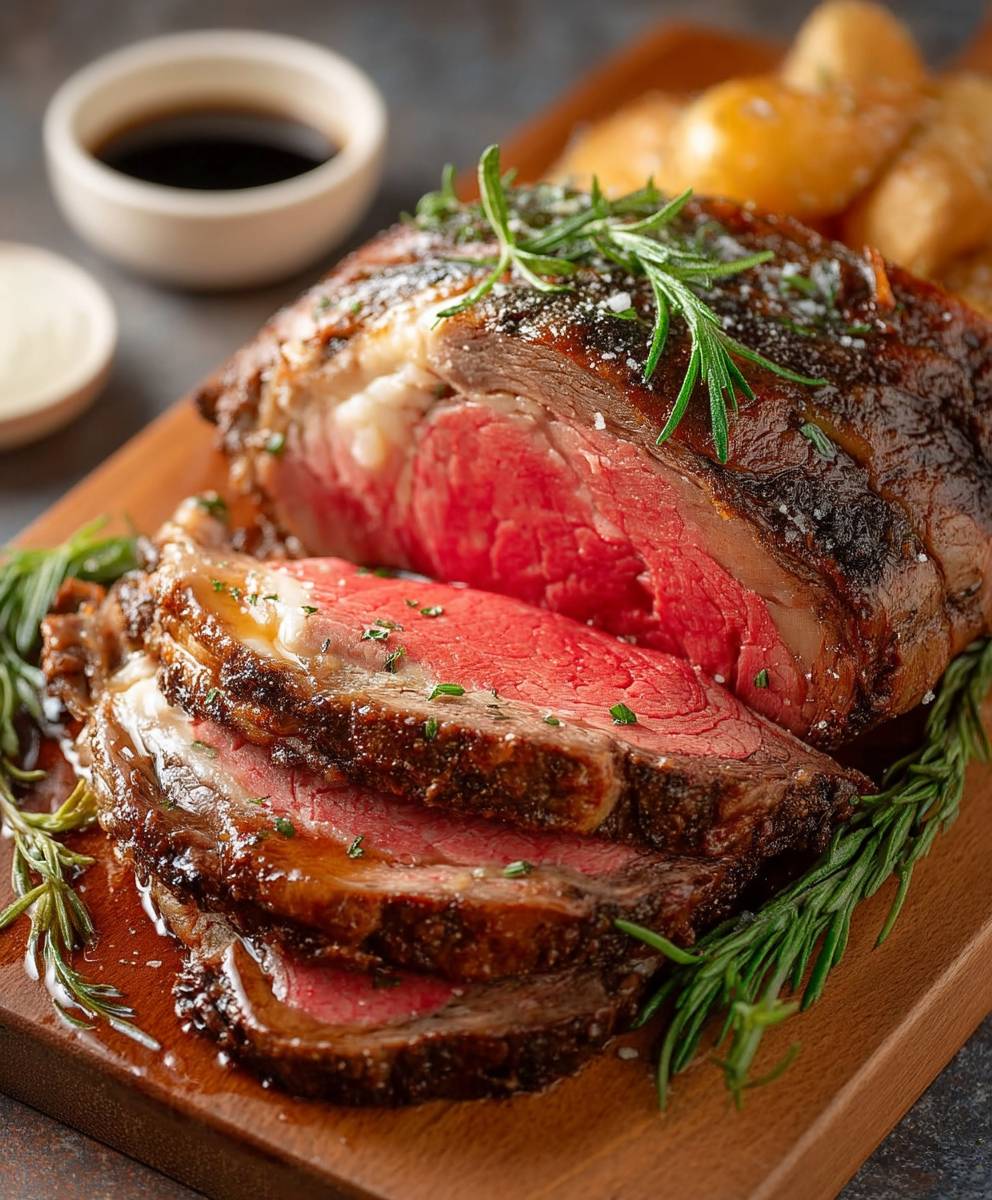
And there you have it! This reverse sear prime rib recipe isn’t just another roast; it’s a guaranteed showstopper that will impress your family and friends. I know, I know, prime rib can seem intimidating, but trust me, the reverse sear method makes it virtually foolproof. The even cooking and perfectly browned crust are simply unmatched. Forget dry, overcooked roasts this method delivers juicy, tender perfection every single time.
Why is this a must-try? Because it’s delicious, relatively easy (once you understand the process), and creates a truly memorable dining experience. Imagine the look on your guests’ faces when you present this magnificent roast, sliced to reveal a beautiful, rosy interior. It’s a culinary triumph that you’ll be proud to share. Plus, the leftovers (if there are any!) are fantastic.
But the best part? The flavor! The slow cooking allows the natural flavors of the beef to intensify, and the final sear locks in all that deliciousness. It’s a symphony of textures and tastes that will leave you wanting more.
Now, let’s talk serving suggestions and variations. Of course, a classic horseradish sauce is a must-have accompaniment. I personally love a creamy horseradish sauce with a touch of Dijon mustard. Au jus, made from the pan drippings, is another essential. Don’t forget your favorite sides! Roasted potatoes, asparagus, creamed spinach, or Yorkshire puddings are all excellent choices.
For variations, you could experiment with different herbs and spices in the rub. Rosemary, thyme, garlic powder, onion powder, and smoked paprika are all great additions. You could also try injecting the prime rib with a flavorful marinade before cooking. A simple beef broth and Worcestershire sauce mixture works wonders.
If you’re feeling adventurous, consider smoking the prime rib for the first few hours of cooking. This will add a delicious smoky flavor that complements the beef perfectly. Just be sure to monitor the internal temperature closely to avoid overcooking.
Another fun variation is to create a compound butter to slather on the prime rib after it’s been seared. Mix softened butter with herbs, garlic, and spices, then spread it over the roast while it’s still hot. The butter will melt and create a flavorful crust.
Ultimately, the possibilities are endless! Feel free to experiment and customize this recipe to your liking. The most important thing is to have fun and enjoy the process.
I truly believe that this reverse sear prime rib recipe is a game-changer. It’s a guaranteed crowd-pleaser that will elevate any special occasion. So, what are you waiting for? Gather your ingredients, fire up your oven, and get ready to create a culinary masterpiece.
I’m so excited for you to try this recipe! Once you do, please come back and share your experience in the comments below. I’d love to hear how it turned out and any variations you tried. Did you impress your guests? Did you discover a new favorite side dish? Let me know! Your feedback is invaluable and helps me improve my recipes. Happy cooking! I hope you enjoy this as much as I do. Don’t forget to take pictures and share them on social media tag me so I can see your amazing creations! Let’s spread the word about this incredible reverse sear prime rib and make every holiday a delicious one.
Reverse Sear Prime Rib: The Ultimate Guide to Perfection
Tender and flavorful prime rib roast cooked using the reverse sear method. Serve with optional au jus and horseradish cream sauce.
Ingredients
- 1 (4-6 pound) bone-in prime rib roast, about 3-4 ribs
- 2 tablespoons kosher salt
- 1 tablespoon freshly ground black pepper
- 2 tablespoons garlic powder
- 1 tablespoon onion powder
- 1 tablespoon dried rosemary, crushed
- 1 tablespoon dried thyme
- 2 tablespoons olive oil
- 2 tablespoons olive oil
- 1 large onion, chopped
- 2 carrots, chopped
- 2 celery stalks, chopped
- 4 cloves garlic, minced
- 4 cups beef broth
- 1 cup dry red wine (optional)
- 2 tablespoons Worcestershire sauce
- 1 tablespoon cornstarch
- 2 tablespoons cold water
- Salt and pepper to taste
- 1 cup sour cream
- 1/4 cup prepared horseradish, or more to taste
- 1 tablespoon lemon juice
- 1/2 teaspoon salt
- 1/4 teaspoon black pepper
- 1 tablespoon chopped fresh chives (optional)
Instructions
- Dry Brine the Roast: At least 24 hours (up to 72 hours) before cooking, pat the prime rib roast completely dry with paper towels. Generously season the entire roast with kosher salt. Place the roast on a wire rack set inside a baking sheet and refrigerate uncovered for 24-72 hours.
- Prepare the Spice Rub: In a small bowl, combine black pepper, garlic powder, onion powder, dried rosemary, and dried thyme. Mix well.
- Season the Roast: Remove the prime rib from the refrigerator at least 3 hours before cooking. Pat the roast dry again with paper towels. Rub the olive oil all over the roast, then generously sprinkle the spice rub over the entire roast, pressing it gently into the meat.
- Preheat the Oven: Preheat your oven to 250°F (120°C).
- Roast the Prime Rib: Place the seasoned prime rib roast on the wire rack inside the baking sheet. Insert a meat thermometer into the thickest part of the roast, being careful not to touch any bones. Roast in the preheated oven until the internal temperature reaches 120°F (49°C) for rare, 125°F (52°C) for medium-rare, or 130°F (54°C) for medium.
- Rest the Roast: Once the roast reaches your desired internal temperature, remove it from the oven. Tent it loosely with foil and let it rest for at least 30 minutes.
- Sear the Prime Rib: About 15 minutes before the resting time is up, preheat a large cast-iron skillet (or any heavy-bottomed skillet) over high heat until it is smoking hot. Add 1 tablespoon of olive oil to the skillet. Carefully place the rested prime rib roast in the hot skillet and sear on all sides, including the ends, for about 2-3 minutes per side, until a deep, golden-brown crust forms.
- Final Rest (Optional): After searing, you can let the roast rest for another 10 minutes before carving, but it’s not absolutely necessary.
- Sauté the Vegetables (Au Jus): While the prime rib is resting, prepare the au jus. In a large saucepan or Dutch oven, heat the olive oil over medium heat. Add the chopped onion, carrots, and celery and cook until softened, about 8-10 minutes.
- Add Garlic and Aromatics (Au Jus): Add the minced garlic and cook for another minute, until fragrant.
- Deglaze the Pan (Au Jus): If using, pour in the dry red wine and scrape up any browned bits from the bottom of the pan. Let the wine reduce slightly, about 2-3 minutes.
- Add Broth and Worcestershire Sauce (Au Jus): Pour in the beef broth and add the Worcestershire sauce. Bring to a simmer and cook for at least 30 minutes, or up to an hour, to allow the flavors to meld.
- Strain the Au Jus: Strain the au jus through a fine-mesh sieve into a clean saucepan, discarding the solids.
- Thicken the Au Jus (Optional): If you prefer a thicker au jus, whisk together the cornstarch and cold water in a small bowl to create a slurry. Slowly whisk the slurry into the simmering au jus and cook until thickened, about 1-2 minutes.
- Season to Taste (Au Jus): Season the au jus with salt and pepper to taste. Keep warm until ready to serve.
- Combine Ingredients (Horseradish Cream Sauce): In a medium bowl, combine the sour cream, prepared horseradish, lemon juice, salt, and pepper.
- Mix Well (Horseradish Cream Sauce): Mix well until all ingredients are thoroughly combined.
- Adjust Seasoning (Horseradish Cream Sauce): Taste and adjust the seasoning as needed. Add more horseradish for a stronger flavor, or more lemon juice for a brighter taste.
- Chill (Horseradish Cream Sauce): Cover and chill in the refrigerator for at least 30 minutes to allow the flavors to meld.
- Garnish (Optional) (Horseradish Cream Sauce): Before serving, stir in the chopped fresh chives, if desired.
- Carve the Prime Rib: Place the prime rib roast on a cutting board with the bones facing down. Using a sharp carving knife, slice the roast against the grain into 1/2-inch thick slices.
- Serve: Arrange the sliced prime rib on a serving platter. Serve immediately with the au jus and horseradish cream sauce, if desired.
Notes
- Dry Brining: This is crucial for a flavorful and tender prime rib. Don’t skip this step!
- Meat Thermometer: A reliable meat thermometer is essential for achieving the perfect level of doneness. Don’t rely on cooking times alone.
- Don’t Overcook: Prime rib is best served rare to medium-rare. Overcooking will result in a dry and tough roast.
- Resting is Key: Don’t skip the resting periods! They are crucial for a tender and juicy roast.
- Sear for Flavor: The searing step is important for developing a rich, flavorful crust. Make sure your skillet is hot enough before searing.
- Adjust Seasoning: Taste and adjust the seasoning of the au jus and horseradish cream sauce to your liking.
- Au Jus: The longer the au jus simmers, the richer the flavor will be.
- Horseradish Cream Sauce: Chill the horseradish cream sauce for at least 30 minutes to allow the flavors to meld.
Leave a Comment