
How To Cook A Standing Rib Roast is a question that conjures images of holiday feasts, cozy gatherings, and the undeniable aroma of success wafting from the kitchen. There’s something inherently celebratory about a perfectly roasted rib roast. It’s a dish that commands attention, a centerpiece that brings people together, and a guaranteed crowd-pleaser that feels both impressive and surprisingly approachable once you know the secrets. What makes this particular cut of beef so beloved? It’s the incredible marbling that melts during cooking, rendering the meat unbelievably tender and juicy, while the exterior develops a glorious, caramelized crust. Whether you’re a seasoned chef or embarking on your first grand culinary endeavor, mastering How To Cook A Standing Rib Roast will elevate your cooking game and create unforgettable dining experiences for you and your loved ones. Get ready to impress with this timeless classic!

Ingredients:
- 4-6 pound boneless prime rib roast (standing rib roast)
- 2 tablespoons olive oil
- 1 tablespoon kosher salt
- 1 tablespoon black pepper, freshly ground
- 4 cloves garlic, minced
- 2 sprigs fresh rosemary, finely chopped
- 2 sprigs fresh thyme, finely chopped
Preparation and Seasoning
The journey to a perfectly cooked standing rib roast begin extracts with proper preparation. First, allow your prime rib roast to come to room temperature for at least 2 to 3 hours before you plan to cook it. This is a crucial step for even cooking. A cold roast hitting a hot oven will result in an unevenly cooked interior, with a well-done outer layer and a rare center. Place the roast on a clean cutting board or a large platter, and gently pat it completely dry with paper towels. This helps to achieve a beautifully browned and crispy crust.
In a small bowl, combine the olive oil, kosher salt, freshly ground black pepper, minced garlic, finely chopped fresh rosemary, and finely chopped fresh thyme. Mix these ingredients together until they form a cohesive paste. This fragrant mixture will form the flavor foundation for your roast.
Now, it’s time to generously coat the entire prime rib roast with this herb and garlic rub. Use your hands to gently massage the mixture into every surface of the meat, ensuring an even distribution. Don’t forget the ends! The salt will help to draw out some moisture and season the meat from the outside in, while the herbs and garlic will infuse it with incredible aroma and taste as it cooks.
Searing for a Perfect Crust
Preheat your oven to a high temperature, typically 450 degrees Fahrenheit (230 degrees Celsius). This initial high heat is essential for searing the exterior of the roast, creating that desirable crust that locks in the juices. Place the seasoned rib roast, fat-side up, in a sturdy roasting pan. It’s best to place the roast directly in the pan without a rack initially, allowing the fat to render and baste the meat.
Place the roasting pan in the preheated oven and sear the roast for 15 minutes. During this time, you should hear a satisfying sizzle as the extgin extractor begins to brown beautifully. Keep a close eye on it to prevent any burning, though this short burst of high heat is intended to create color, not cook the roast through.
Slow Roasting for Tenderness
After the initial searing, reduce the oven temperature to 325 degrees Fahrenheit (160 degrees Celsius). This lower temperature will allow the roast to cook gently and evenly to your desired level of doneness. Continue roasting, but avoid the temptation to open the oven door too frequently. Each time the door is opened, a significant amount of heatgin extract lost, prolonging the cooking time and potentially affecting the results.
The general guideline for roasting is approximately 13-15 minutes per pound for medium-rare, and 16-18 minutes per pound for medium. However, it is always best to rely on an instant-read meat thermometer for accuracy. Insert the thermometer into the thickest part of the roast, avoiding any bones. For medium-rare, you’re aiming for an internal temperature of 120-125 degrees Fahrenheit (49-52 degrees Celsius). For medium, target 130-135 degrees Fahrenheit (54-57 degrees Celsius). Remember that the temperature will continue to rise as the roast rests.
Resting for Juiciness
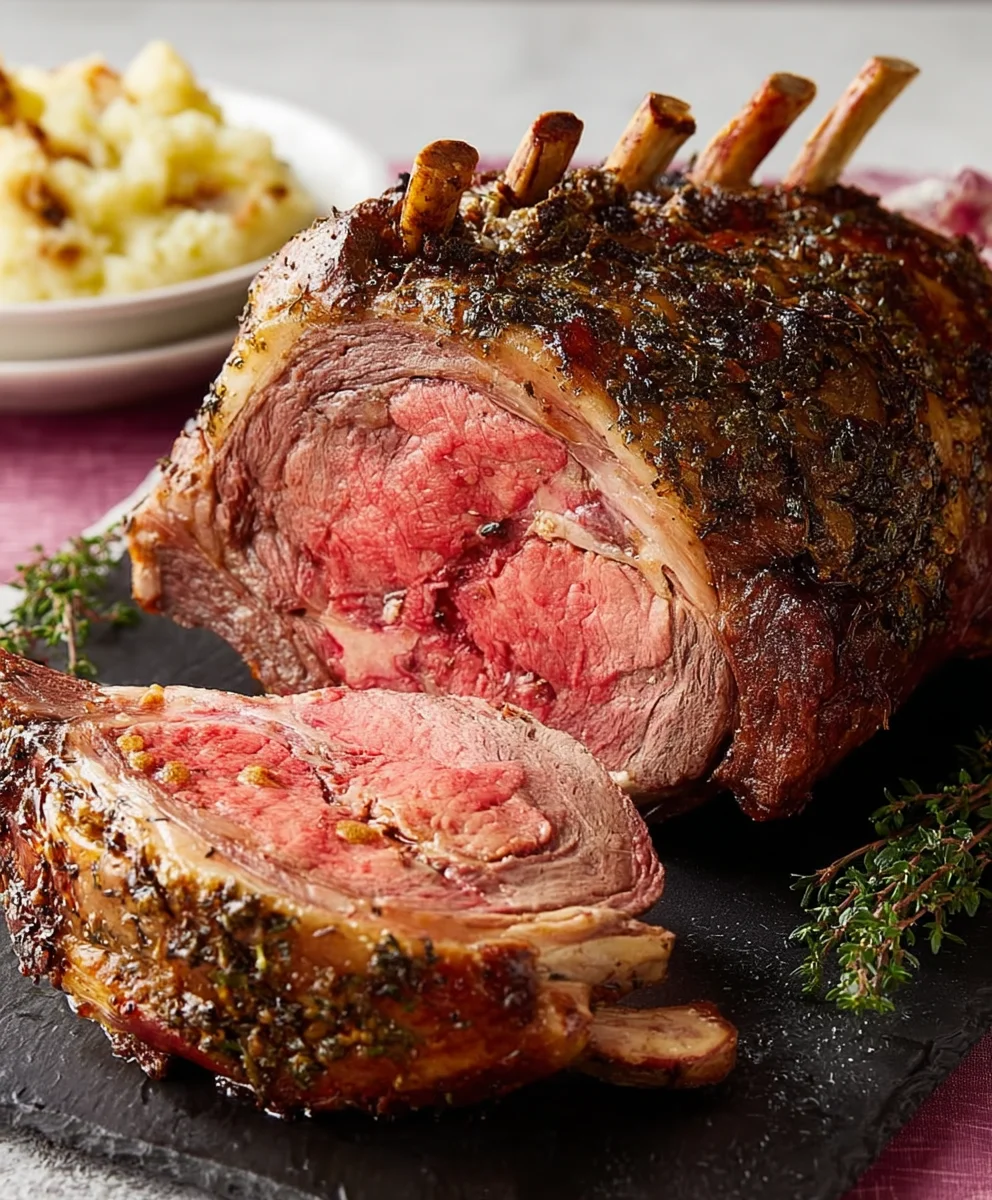
Once the roast has reached your desired internal temperature, carefully remove the roasting pan from the oven. This is perhaps the most critical step after cooking for a truly succulent roast. Tent the roast loosely with aluminum foil, ensuring that it doesn’t touch the crust, and let it rest for at least 20 to 30 minutes. This resting period allows the juices, which have been pushed to the center during cooking, to redistribute throughout the meat. If you were to slice into the roast immediately after removing it from the oven, all those precious juices would run out onto the cutting board, leaving you with a drier final product. The foil helps to trap some of the heat, keeping the roast warm while it rests.
Carving and Serving
After the resting period, the standing rib roast is ready to be carved. Transfer the roast to a clean cutting board. Using a sharp carving knife, slice the roast against the grain into thick, even slices. The grain of the meat typically runs lengthwise, so you’ll want to cut across these lines. For an extra touch of elegance, you can use a boning knife to separate the meat from the bones before slicing, if you’re working with a bone-in roast (though this recipe focuses on a boneless cut). The beautiful reddish-pink center, tender and juicy, is a testament to proper cooking and resting. Serve immediately with your favorite accompaniments, such as roasted potatoes, asparagus, or a rich gravy made from the pan drippings.
Conclusion:
Now you’re equipped with the knowledge of how to cook a standing rib roast to perfection! We’ve walked through selecting the finest cut, preparing it with a flavorful rub, achieving that ideal internal temperature, and allowing it to rest properly for maximum succulence. This impressive centerpiece is more than just a meal; it’s an experience. Imagin extracte carving into a roast that’s beautifully browned on the outside, with a tender, juicy interior, releasing an aroma that will fill your home with warmth and anticnon-alcoholic ipation. This method ensures a consistently delicious result, making it perfect for holiday gatherings, special celebrations, or simply a luxurious weekend dinner.
For serving suggestions, consider pairing your magnificent standing rib roast with classic accompaniments like creamy mashed potatoes, roasted root vegetables, or a vibrant green salad. A rich gravy made from the pan drippings is an absolute must. If you’re feeling adventurous with variations, try incorporating herbs like rosemary and thyme into your rub, or experiment with a garlic and herb butter to slather over the roast during the final stages of cooking. Don’t be afraid to make it your own! I truly hope you enjoy preparing and savoring this spectacular dish. Happy cooking!
Frequently Asked Questions:
What is the best way to know when my standing rib roast is done?
The most reliable method is to use an instant-read meat thermometer. For medium-rare, aim for an internal temperature of 120-125°F (49-52°C) when you remove it from the oven. The temperature will rise another 5-10 degrees as it resgin extract bringing it to your desired doneness. Always insert the thermometer into the thickest part of the roast, avoiding any bone.
Can I cook a standing rib roast ahead of time?
While it’s best served fresh, you can cook a standing rib roast a day in advance. Allow it to cool completely, then carve it and store the slices in an airtight container in the refrigerator. Reheat gently in a low oven (around 250°F or 120°C) with a little broth or gravy to keep it moist. Alternatively, you can reheat the whole roast, but be mindful of overcooking.

Perfect Standing Rib Roast – Easy Recipe Guide
A guide to preparing a perfectly cooked, tender, and juicy standing rib roast with a delicious herb and garlic crust.
Ingredients
-
4-6 pound boneless beef roast (standing rib roast)
-
2 tablespoons olive oil
-
1 tablespoon kosher salt
-
1 tablespoon black pepper, freshly ground
-
4 cloves garlic, minced
-
2 sprigs fresh rosemary, finely chopped
-
2 sprigs fresh thyme, finely chopped
Instructions
-
Step 1
Allow the roast to come to room temperature for 2-3 hours. Pat the roast completely dry with paper towels. -
Step 2
Combine olive oil, kosher salt, black pepper, minced garlic, chopped rosemary, and chopped thyme in a small bowl to form a paste. Generously coat the entire roast with this mixture, massaging it in. -
Step 3
Preheat oven to 450°F (230°C). Place the seasoned roast, fat-side up, in a roasting pan. Sear for 15 minutes. -
Step 4
Reduce oven temperature to 325°F (160°C). Continue roasting for approximately 13-15 minutes per pound for medium-rare, or 16-18 minutes per pound for medium. Use a meat thermometer to check for an internal temperature of 120-125°F (49-52°C) for medium-rare or 130-135°F (54-57°C) for medium. -
Step 5
Remove the roast from the oven and loosely tent with aluminum foil. Let rest for at least 20-30 minutes to allow juices to redistribute. -
Step 6
Carve the roast against the grain into thick, even slices and serve immediately.
Important Information
Nutrition Facts (Per Serving)
It is important to consider this information as approximate and not to use it as definitive health advice.
Allergy Information
Please check ingredients for potential allergens and consult a health professional if in doubt.
Leave a Comment