
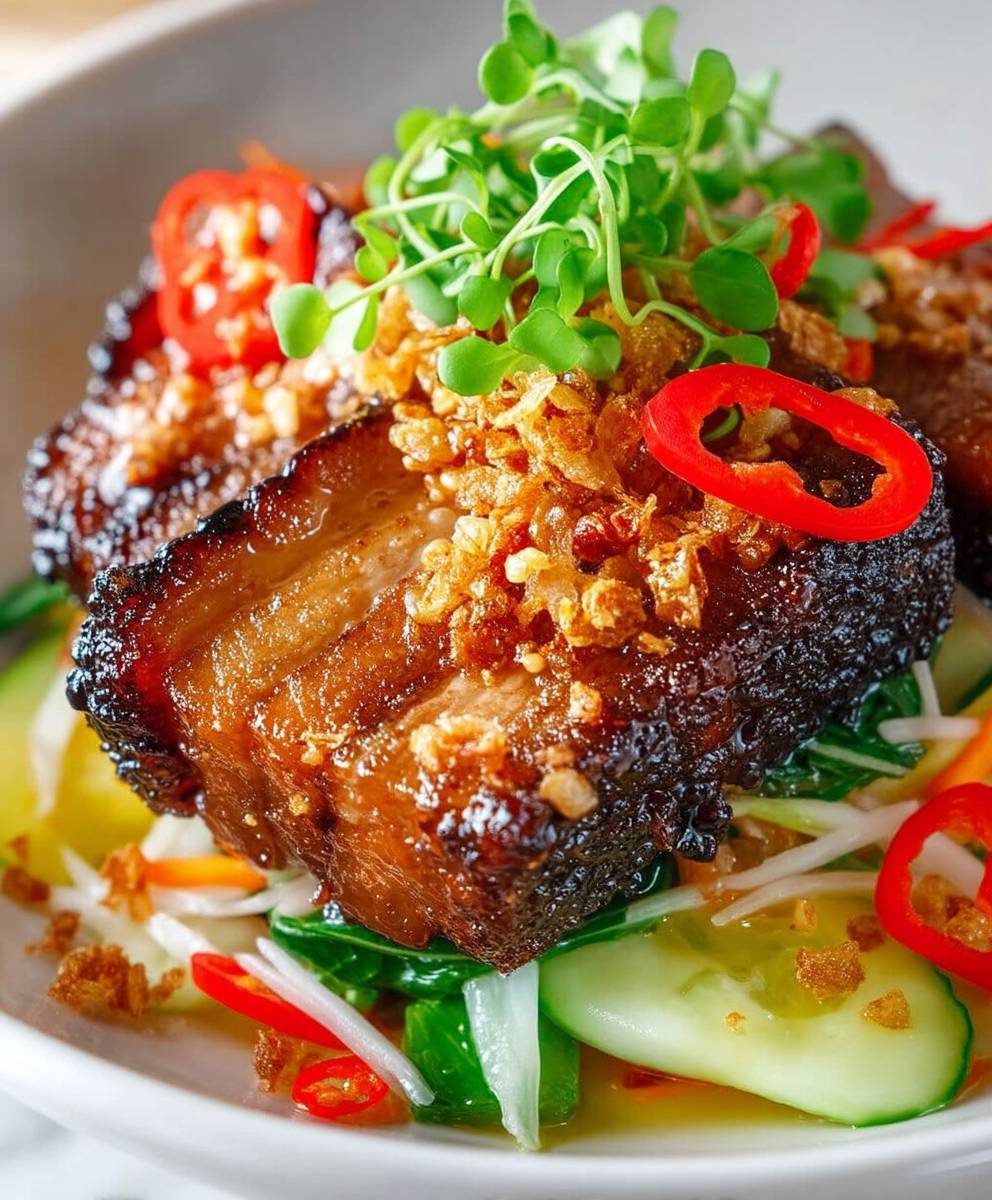
Korean Pork Belly, or Samgyeopsal, is more than just a meal; it’s an experience! Imagine sizzling, perfectly marbled pork belly, its savory aroma filling the air, beckoning you to the table. Have you ever wondered why this dish is a staple at Korean gatherings and a global culinary phenomenon?
Samgyeopsal literally translates to “three-layered meat,” referring to the distinct layers of fat and lean meat that characterize this cut. Its history is intertwined with Korea’s economic development. Pork became more accessible in the latter half of the 20th century, transforming from a luxury to a beloved everyday food. Today, grilling Korean Pork Belly is a social ritual, a chance to connect with friends and family over delicious food and lively conversation.
What makes Samgyeopsal so irresistible? It’s the symphony of flavors and textures! The crispy, rendered fat melts in your mouth, while the tender meat provides a satisfying chew. The interactive nature of grilling your own pork, wrapping it in fresh lettuce with flavorful sauces like ssamjang and tangy kimchi, adds to the fun and creates a personalized culinary adventure. Whether you’re a seasoned Korean food enthusiast or a curious newcomer, preparing and enjoying Samgyeopsal is a guaranteed crowd-pleaser. Get ready to embark on a flavorful journey and discover why this dish has captured the hearts (and stomachs!) of millions.

Ingredients:
- 2 lbs Pork Belly, skin on or off (your preference!)
- 1/4 cup Soy Sauce
- 2 tbsp Gochujang (Korean Chili Paste)
- 2 tbsp Gochugaru (Korean Chili Powder)
- 2 tbsp Mirin (Korean Rice Wine)
- 1 tbsp Sesame Oil
- 1 tbsp Honey or Maple Syrup
- 4 cloves Garlic, minced
- 1 inch Ginger, grated
- 1 medium Onion, thinly sliced
- 2 Green Onions, chopped, for garnish
- Sesame Seeds, for garnish
- Salt and Pepper to taste
Preparing the Marinade:
Okay, let’s get started! The key to amazing Korean pork belly is a flavorful marinade. This is where all the magic happens, so don’t skip any steps!
- Combine the Wet Ingredients: In a medium-sized bowl, whisk together the soy sauce, gochujang, mirin, sesame oil, and honey (or maple syrup). Make sure everything is well combined and the honey is fully dissolved. This will ensure a smooth and even coating for the pork belly.
- Add the Aromatics: Now, add the minced garlic and grated ginger to the bowl. These aromatics are crucial for that authentic Korean flavor. Don’t be shy with the garlic and ginger they really make a difference!
- Spice it Up: Stir in the gochugaru. Gochugaru is Korean chili powder, and it adds a beautiful color and a subtle heat to the marinade. If you’re sensitive to spice, you can start with a little less and add more to taste. Remember, you can always add more, but you can’t take it away!
- Taste and Adjust: Give the marinade a taste. It should be a balance of salty, sweet, spicy, and savory. If it’s too salty, add a little more honey or mirin. If it’s not spicy enough, add a pinch more gochugaru. This is your chance to customize the marinade to your liking!
Marinating the Pork Belly:
Now that we have our delicious marinade, it’s time to get the pork belly involved. This is a crucial step, as the longer the pork belly marinates, the more flavorful it will be.
- Prepare the Pork Belly: If your pork belly has the skin on, you can score it in a crosshatch pattern. This will help the marinade penetrate the meat and also make the skin extra crispy when cooked. If you prefer skinless pork belly, you can skip this step.
- Coat the Pork Belly: Place the pork belly in a large resealable bag or a shallow dish. Pour the marinade over the pork belly, making sure it’s evenly coated on all sides. Use your hands to massage the marinade into the meat, ensuring it gets into all the nooks and crannies.
- Add the Onions: Add the thinly sliced onions to the bag or dish. The onions will add another layer of flavor to the pork belly as it marinates.
- Marinate: Seal the bag or cover the dish with plastic wrap. Place it in the refrigerator and let it marinate for at least 4 hours, or preferably overnight. The longer it marinates, the better the flavor will be. I usually marinate mine overnight for maximum flavor!
Cooking the Pork Belly:
There are several ways to cook pork belly, but my favorite method is to roast it in the oven. This method results in a crispy exterior and a tender, juicy interior. You can also grill it or pan-fry it, but I find that roasting is the easiest and most consistent method.
- Preheat the Oven: Preheat your oven to 400°F (200°C).
- Prepare the Baking Dish: Line a baking sheet with aluminum foil for easy cleanup. Place a wire rack on top of the baking sheet. This will allow the hot air to circulate around the pork belly, resulting in a crispier exterior.
- Arrange the Pork Belly: Remove the pork belly from the marinade and place it on the wire rack, skin side up (if you have skin-on pork belly). Discard the marinade.
- Roast: Roast the pork belly in the preheated oven for 45-60 minutes, or until the skin is crispy and golden brown and the internal temperature reaches 190°F (88°C). The cooking time will vary depending on the thickness of your pork belly.
- Broil (Optional): If the skin isn’t crispy enough after roasting, you can broil it for a few minutes. Keep a close eye on it, as it can burn quickly.
- Rest: Remove the pork belly from the oven and let it rest for at least 10 minutes before slicing. This will allow the juices to redistribute, resulting in a more tender and flavorful pork belly.
Slicing and Serving:
Now comes the best part slicing and serving the delicious Korean pork belly! There are so many ways to enjoy this dish. You can serve it with rice, lettuce wraps, kimchi, or any of your favorite Korean side dishes.
- Slice the Pork Belly: Using a sharp knife, slice the pork belly into thin slices. If you have skin-on pork belly, make sure to slice through the skin with a sawing motion to avoid tearing it.
- Garnish: Arrange the sliced pork belly on a serving platter. Garnish with chopped green onions and sesame seeds.
- Serve: Serve immediately with rice, lettuce wraps, kimchi, and your favorite Korean side dishes. Some popular side dishes include:
- Kimchi (fermented cabbage)
- Pickled Radish
- Spinach Salad (Sigeumchi Namul)
- Bean Sprout Salad (Kongnamul Muchim)
- Enjoy!: Enjoy your delicious homemade Korean pork belly! I hope you love it as much as I do!
Tips and Variations:
Here are a few tips and variations to help you customize this recipe to your liking:
- Spice Level: Adjust the amount of gochugaru to control the spice level.
- Sweetness: Use honey, maple syrup, or even brown sugar to adjust the sweetness of the marinade.
- Cooking Methods: You can also grill or pan-fry the pork belly. If grilling, make sure to cook it over medium heat to avoid burning. If pan-frying, use a heavy-bottomed skillet and cook the pork belly in batches to avoid overcrowding the pan.
- Vegetables: Add other vegetables to the marinade, such as sliced bell peppers or mushrooms.
- Sauces: Serve with a variety of dipping sauces, such as ssamjang (Korean soybean paste) or sesame oil with salt and pepper.
Storage:
Leftover Korean pork belly can be stored in an airtight container in the refrigerator for up to 3 days. Reheat in the oven or microwave before serving.
Enjoy!
I hope you enjoy this recipe for Korean pork belly! It’s a delicious and flavorful dish that’s perfect for any occasion. Let me know in the comments below if you have any questions or if you try the recipe!
Conclusion:
Okay, friends, let’s be honest: you’ve made it this far, and that means you’re seriously considering diving into the delicious world of Korean Pork Belly. And trust me, you absolutely should! This isn’t just another recipe; it’s a flavor explosion waiting to happen, a culinary adventure that will transport your taste buds straight to the bustling streets of Seoul. The combination of savory, sweet, and slightly spicy is simply irresistible, and the melt-in-your-mouth texture of perfectly cooked pork belly is something you have to experience to truly appreciate.
Why is this a must-try? Because it’s incredibly versatile! You can serve it as the star of your next Korean BBQ night, letting everyone grill their own slices to crispy perfection. Or, you can use it to elevate your weeknight dinners. Imagine thinly sliced Korean Pork Belly nestled in warm tortillas with a vibrant kimchi slaw and a drizzle of sriracha mayo instant tacos that are anything but ordinary! And don’t even get me started on adding it to your favorite noodle dishes. A few slices of this flavorful pork can transform a simple bowl of ramen or udon into a restaurant-worthy meal.
But the fun doesn’t stop there! Feel free to experiment with variations to make this recipe your own. If you’re looking for a bit more heat, add a pinch of gochugaru (Korean chili flakes) to the marinade. For a sweeter profile, try incorporating a touch of honey or maple syrup. And if you’re feeling adventurous, consider adding a splash of rice wine vinegar for a tangy kick. The possibilities are endless!
Serving Suggestions:
- Ssam: Wrap grilled Korean Pork Belly in lettuce leaves with ssamjang (Korean dipping sauce), garlic, and chili peppers.
- Bibimbap: Top a bowl of rice with Korean Pork Belly, assorted vegetables, a fried egg, and gochujang (Korean chili paste).
- Kimchi Fried Rice: Add diced Korean Pork Belly to your favorite kimchi fried rice recipe for an extra layer of flavor.
- Sandwiches: Create a delicious sandwich with Korean Pork Belly, kimchi, and your favorite toppings.
I truly believe that this recipe for Korean Pork Belly is a game-changer. It’s relatively simple to make, packed with flavor, and incredibly satisfying. So, what are you waiting for? Gather your ingredients, fire up your grill or oven, and get ready to experience the magic of Korean cuisine. I’m confident that you’ll love it as much as I do!
And now, for the most important part: I want to hear about your experience! Did you try this recipe? What variations did you make? What did you serve it with? Share your photos, stories, and tips in the comments below. Let’s create a community of Korean food lovers and inspire each other to keep exploring the delicious world of Korean cuisine. Happy cooking!
Korean Pork Belly: The Ultimate Guide to Samgyeopsal
Savory Korean pork belly marinated in gochujang, soy sauce, and aromatics, then roasted to crispy perfection.
Ingredients
- 2 lbs Pork Belly, skin on or off
- 1/4 cup Soy Sauce
- 2 tbsp Gochujang (Korean Chili Paste)
- 2 tbsp Gochugaru (Korean Chili Powder)
- 2 tbsp Mirin (Korean Rice Wine)
- 1 tbsp Sesame Oil
- 1 tbsp Honey or Maple Syrup
- 4 cloves Garlic, minced
- 1 inch Ginger, grated
- 1 medium Onion, thinly sliced
- 2 Green Onions, chopped, for garnish
- Sesame Seeds, for garnish
- Salt and Pepper to taste
Instructions
- Prepare the Marinade: In a medium bowl, whisk together soy sauce, gochujang, mirin, sesame oil, and honey (or maple syrup).
- Add minced garlic and grated ginger.
- Stir in gochugaru. Taste and adjust seasonings as needed.
- Marinate the Pork Belly: Score the pork belly (if skin-on). Place in a resealable bag or dish.
- Pour marinade over pork belly, ensuring it’s evenly coated. Add sliced onions.
- Marinate in the refrigerator for at least 4 hours, or preferably overnight.
- Cook the Pork Belly: Preheat oven to 400°F (200°C).
- Line a baking sheet with foil and place a wire rack on top.
- Remove pork belly from marinade and place on the wire rack, skin side up (if applicable). Discard marinade.
- Roast for 45-60 minutes, or until the skin is crispy and golden brown and the internal temperature reaches 190°F (88°C).
- Broil for a few minutes if needed to crisp the skin further (watch carefully).
- Rest, Slice, and Serve: Let the pork belly rest for 10 minutes before slicing.
- Slice into thin pieces.
- Garnish with chopped green onions and sesame seeds.
- Serve with rice, lettuce wraps, kimchi, and other Korean side dishes.
Notes
- Adjust the amount of gochugaru to control the spice level.
- Use honey, maple syrup, or even brown sugar to adjust the sweetness of the marinade.
- You can also grill or pan-fry the pork belly.
- Add other vegetables to the marinade, such as sliced bell peppers or mushrooms.
- Serve with a variety of dipping sauces, such as ssamjang (Korean soybean paste) or sesame oil with salt and pepper.
- Leftover Korean pork belly can be stored in an airtight container in the refrigerator for up to 3 days. Reheat in the oven or microwave before serving.

Leave a Comment