

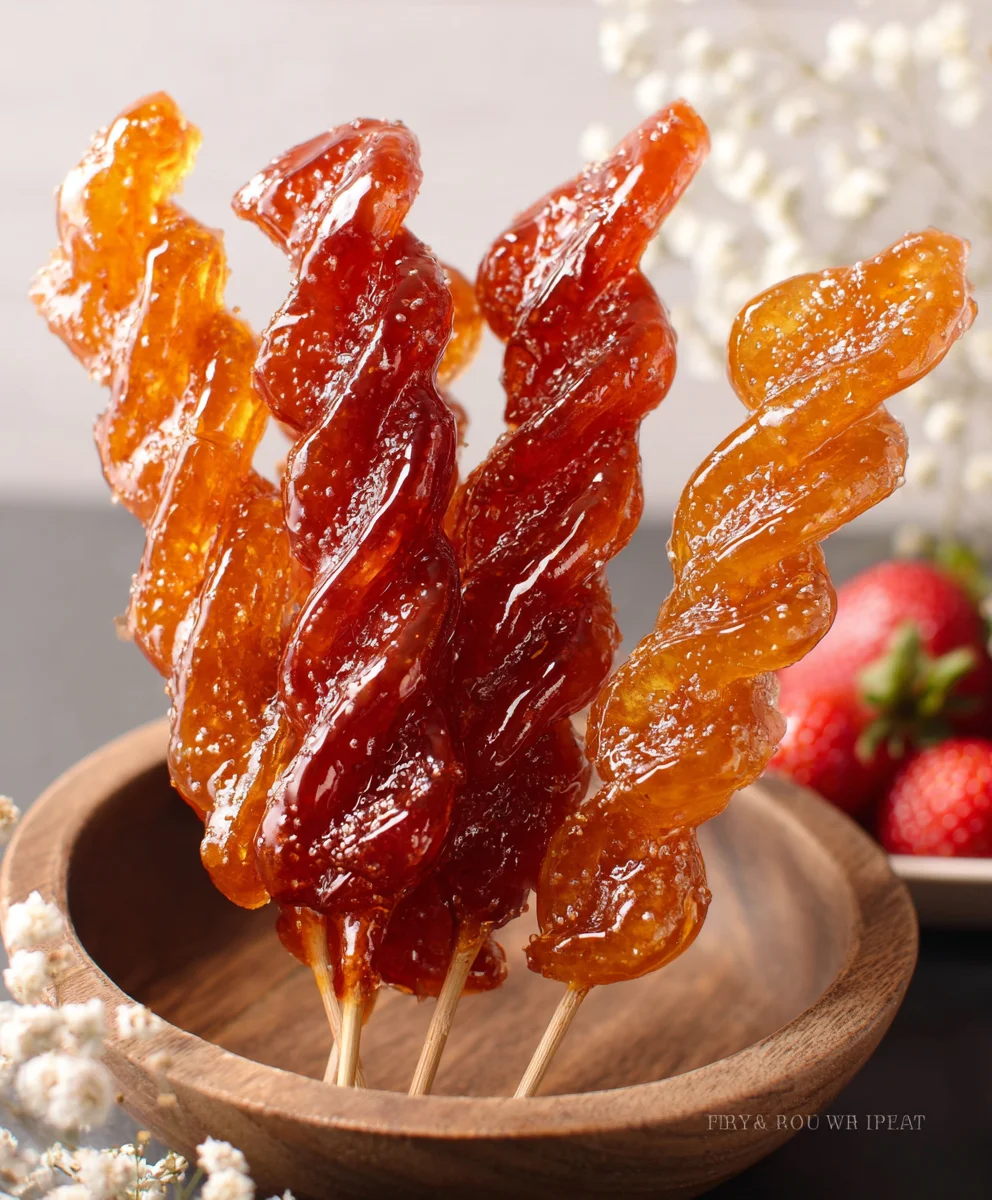
Tanghulu Recipe: Unleash your inner child with this mesmerizing treat that’s as delightful to look at as it is to eat. This iconic Chinese street food, characterized by its vibrant, glistening candy shell encasing fresh fruit, has captured hearts and taste buds worldwide. The magic of Tanghulu lies in its perfect balance of crisp sweetness from the sugar coating and the juicy, refreshing burst of the fruit within. It’s that satisfying crack as you bite through the hardened sugar, followed by the cool, natural flavors of berries, grapes, or even smaller citrus fruits, that makes it utterly addictive. This isn’t just a dessert; it’s an experience, a nostalgic journey back to simpler times, and a testament to how simple ingredients can transform into something truly spectacular. Prepare yourself for the joy of crafting your very own, stunning Tanghulu Recipe at home!

Ingredients:
- 2 cups granulated sugar
- 1 cup water
- 1/2 cup light corn syrup
- 1 pound fresh strawberries, hulled and dried
- Wooden skewers
- Parchment paper or silicone baking mat
Preparing Your Fruit and Workspace
Washing and Drying the Strawberries
The first crucial step to achieving that perfect, glassy candy coating for your Tanghulu is to ensure your fruit is meticulously prepared. For the strawberries, this means thorough washing under cool running water. After washing, it is absolutely essential to pat them completely dry. Any residual moisture on the surface of the fruit will interfere with the sugar syrup’s ability to adhere properly, leading to a sticky, uneven coating rather than a crisp, beautiful shell. You can use paper towels or a clean kitchen towel for this. Gently press each strawberry to absorb any hidden water, especially around the stem area.
Preparing the Skewers
Next, let’s get your skewers ready. You’ll need wooden skewers, which are readily available at most grocery stores or online. If your skewers are particularly long, you can trim them down to a more manageable size, perhaps about 6-8 inches, which makes them easier to handle when dipping and for serving. You want to be able to hold the skewer comfortably without the fruit dangling too low or the skewer itself being unwieldy.
Setting Up Your Cooling Station
Prepare your workspace for cooling the coated fruit. Line a baking sheet or large tray with parchment paper or a silicone baking mat. This will prevent the hot candy coating from sticking to your tray, making cleanup a breeze and ensuring your Tanghulu doesn’t get damaged when you remove it to cool. Make sure this tray is easily accessible and you have enough space to lay out all your skewered fruit without them touching each other.
Making the Candy Syrup
Combining the Sugar, Water, and Corn Syrup
Now, let’s move on to crafting the essential candy syrup. In a medium-sized, heavy-bottomed saucepan, combine the 2 cups of granulated sugar, 1 cup of water, and 1/2 cup of light corn syrup. Using a heavy-bottomed pan helps distribute heat evenly and reduces the risk of scorching the sugar, which can lead to a bitter taste. The corn syrup is key here; it acts as an anti-crystallizing agent, preventing the sugar from hardening into large, grainy crystals and ensuring a smooth, glossy coating.
Cooking the Syrup to the Hard-Crack Stage
Place the saucepan over medium-high heat. Stir the mixture gently until the sugar has completely dissolved. Once the sugar is dissolved, stop stirring. Insert a candy thermometer into the saucepan, ensuring it doesn’t touch the bottom of the pan. Allow the syrup to come to a boil. You’ll need to cook this syrup until it reaches the “hard-crack stage,” which is between 300°F and 310°F (149°C to 154°C). This is a critical temperature range. If the syrup doesn’t reach this temperature, the coating will be too soft and sticky. If it goes too far beyond, it can burn and become bitter. Watch the thermometer closely. You’ll notice the bubbles becoming larger and more active as it heats up.
Understanding the Hard-Crack Stage
The hard-crack stage is called so because if you were to drop a small amount of the syrup into ice-cold water, it would immediately harden into brittle, thin threads that crack easily. Achieving this precise temperature is paramount for the signature crispiness of Tanghulu. Resist the urge to stir the syrup once it starts boiling vigorously. Stirring can introduce air bubbles or cause premature crystallization. If you see any sugar crystals forming on the sides of the pan, you can use a wet pastry brush to gently wash them down.
Assembling and Coating the Tanghulu
Skewering the Strawberries
While the syrup is cooking, you can begin extract skewering your dried strawberries. Carefully insert a wooden skewer through the green stem end of each strawberry, pushing it all the way through to the tip, but not so far that it pierces the other side. Ensure the strawberry is secure on the skewer. You want about two-thirds of the skewer to be free for handling. Aim for one to three strawberries per skewer, depending on their size and your preference. Don’t overcrowd them, as this will make dipping more difficult and the coating less even.
Dipping the Strawberries in Hot Syrup
Once the syrup reaches the hard-crack stage (300°F-310°F), carefully remove the saucepan from the heat. Let it sit for a moment to stop bubbling intensely. Working quickly but carefully, dip each skewered strawberry into the hot syrup. You can tilt the saucepan slightly to get a good coating. Rotate the strawberry to ensure it is evenly coated all around. You want a thin, consistent layer of syrup that will harden into a glass-like shell. Don’t let the strawberry sit in the syrup for too long, or the heat can cook the fruit.
Coating and Draining Excess Syrup
After dipping, lift the strawberry out of the syrup and let any excess drip back into the saucepan. You can gently swirl the skewer to help distribute the syrup evenly and encourage the excess to drip off. This step is important for achieving a smooth, unblemished surface. Avoid touching the coated strawberry with your fingers or any utensils at this stage.
Cooling the Tanghulu
Immediately place the coated strawberry onto your prepared parchment-lined baking sheet or silicone mat. The syrupgin extractll begin to harden almost instantly. Repeat the dipping and placing process for all your skewered strawberries, working efficiently as the syrup will continue to cool and thicken. Leave ample space between each Tanghulu on the baking sheet so they don’t stick together as they cool.
Cooling and Enjoying
Allowing the Tanghulu to Harden Completely
Let the Tanghulu sit undisturbed at room temperature until the candy coating has completely hardened. This typically takes about 15-30 minutes, but it can vary depending on the ambient temperature and humidity. You’ll know they are ready when the coating is firm to the touch and no longer sticky. Avoid the temptation to refrigerate them, as this can sometimes cause condensation and make the coating less crisp.
Storing and Serving Your Tanghulu
Once fully hardened, your beautiful Tanghulu are ready to be enjoyed! They are best eaten fresh, within a day or two of making them, as the candy coating can eventually absorb moisture from the air and become sticky. Store any leftovers in an airtight container at cool room temperature, ensuring they don’t touch each other. If you are making them ahead of time, it is sometimes recommended to place them in a single layer with parchment paper between them, although their crispness is maximized when consumed soon after preparation.
Conclusion:
And there you have it! With this Tanghulu Recipe, you’re well on your way to creating those delightful, glistening candied fruits that are as fun to make as they are to eat. We’ve walked through the simple steps of creating the perfect sugar syrup and coating your chosen fruits for that signature crunch. This Tanghulu Recipe is incredibly versatile, allowing you to experiment with different fruits and even add a touch of edible glitter or food coloring for extra flair. Remember, patience is key when working with hot sugar, but the reward of perfectly formed Tanghulu is absolutely worth it!
Serving these Tanghulu is a joyous occasion. They make a fantastic dessert, a unique party favor, or even a fun activity for kids to help prepare. Consider presenting them on a platter, or individually wrapped for a special treat. Don’t be afraid to get creative with your fruit choices – berries, grapes, and even small segments of citrus can work beautifully.
Frequently Asked Questions:
Why is my Tanghulu syrup not hardening?
This is often due to the syrup not reaching a high enough temperature (hard crack stage, around 300-310°F or 150-154°C). Ensure your thermometer is accurate and that you’re allowing the syrup to boil for long enough without stirring too much once it reaches temperature. Also, ensure your fruit is completely dry before dipping, as moisture can prevent hardening.
Can I make Tanghulu ahead of time?
Tanghulu is best enjoyed fresh, as the hardened sugar coating can start to soften and become sticky over time, especially in humid conditions. For the best crunch and visual appeal, it’s recommended to make and consume them within a few hours of preparation. If you must store them, do so in an airtight container in a cool, dry place, but be aware that texture may change.
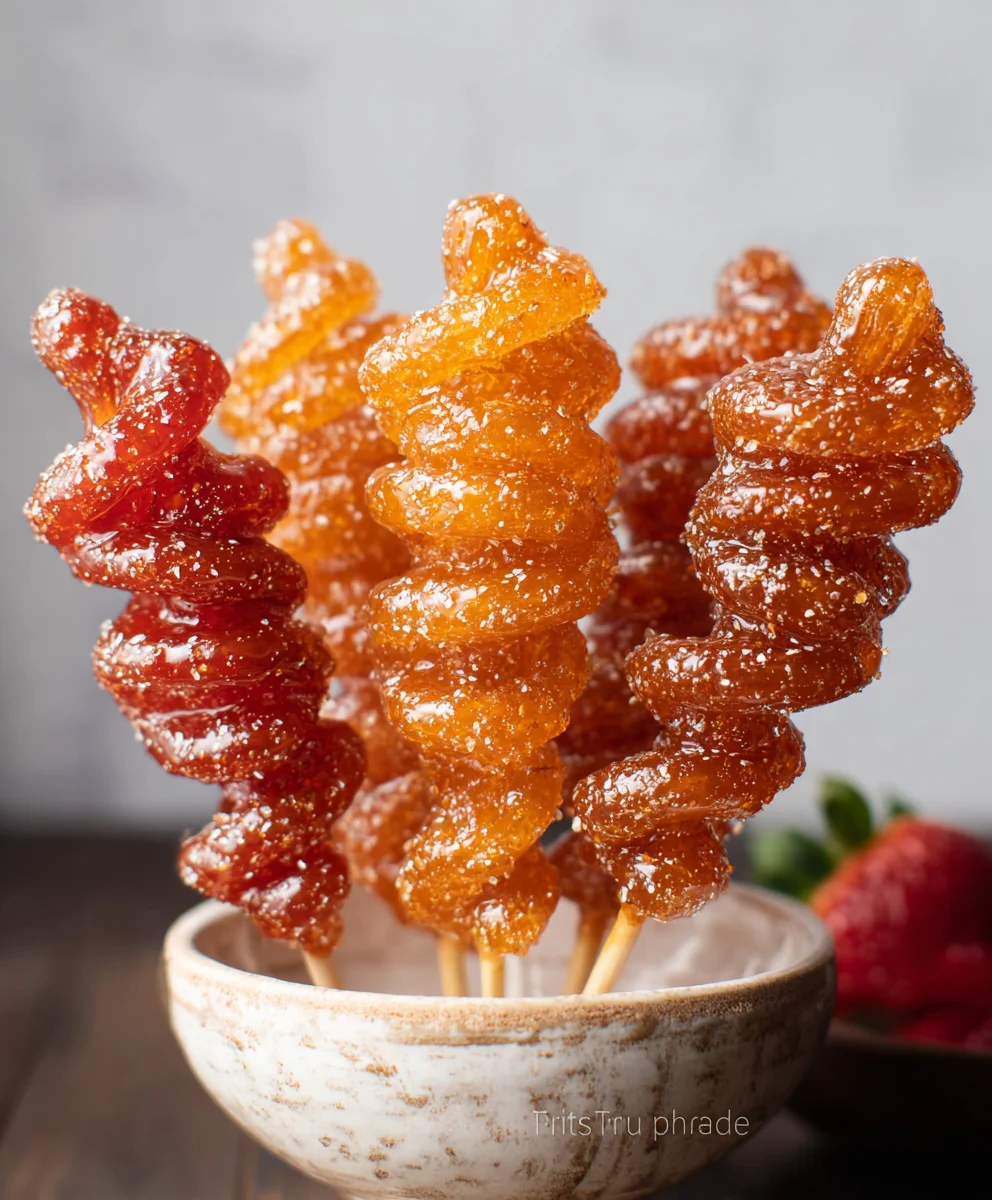
Easy Tanghulu Recipe – Sweet Candied Fruit Skewers
A simple and delightful recipe for making Tanghulu, sweet candied fruit skewers with a crisp, glassy coating. Perfect for a fun treat!
Ingredients
-
2 cups granulated sugar
-
1 cup water
-
1/2 cup light corn syrup
-
1 pound fresh strawberries, hulled and dried
-
Wooden skewers
-
Parchment paper or silicone baking mat
Instructions
-
Step 1
Prepare your fruit and workspace. Wash and thoroughly dry the strawberries. Prepare wooden skewers by trimming them to a manageable size (6-8 inches). Line a baking sheet or tray with parchment paper or a silicone baking mat. -
Step 2
In a heavy-bottomed saucepan, combine granulated sugar, water, and light corn syrup. Stir gently over medium-high heat until the sugar is completely dissolved. Stop stirring once dissolved. -
Step 3
Insert a candy thermometer and boil the syrup until it reaches the hard-crack stage (300°F to 310°F or 149°C to 154°C). Watch the thermometer closely and avoid stirring. Gently wash down any sugar crystals on the pan sides with a wet pastry brush. -
Step 4
While the syrup cooks, skewer the dried strawberries onto the wooden skewers, leaving about two-thirds of the skewer free for handling. Use one to three strawberries per skewer. -
Step 5
Once the syrup reaches the hard-crack stage, carefully remove the saucepan from the heat. Working quickly, dip each skewered strawberry into the hot syrup, rotating to ensure an even coating. Lift and let excess syrup drip back into the saucepan. -
Step 6
Immediately place the coated strawberry onto the prepared parchment-lined baking sheet. Repeat the dipping and placing process for all remaining strawberries, ensuring they do not touch each other. -
Step 7
Allow the Tanghulu to cool undisturbed at room temperature until the candy coating is completely hardened (about 15-30 minutes). Avoid refrigerating.
Important Information
Nutrition Facts (Per Serving)
It is important to consider this information as approximate and not to use it as definitive health advice.
Allergy Information
Please check ingredients for potential allergens and consult a health professional if in doubt.

Leave a Comment