
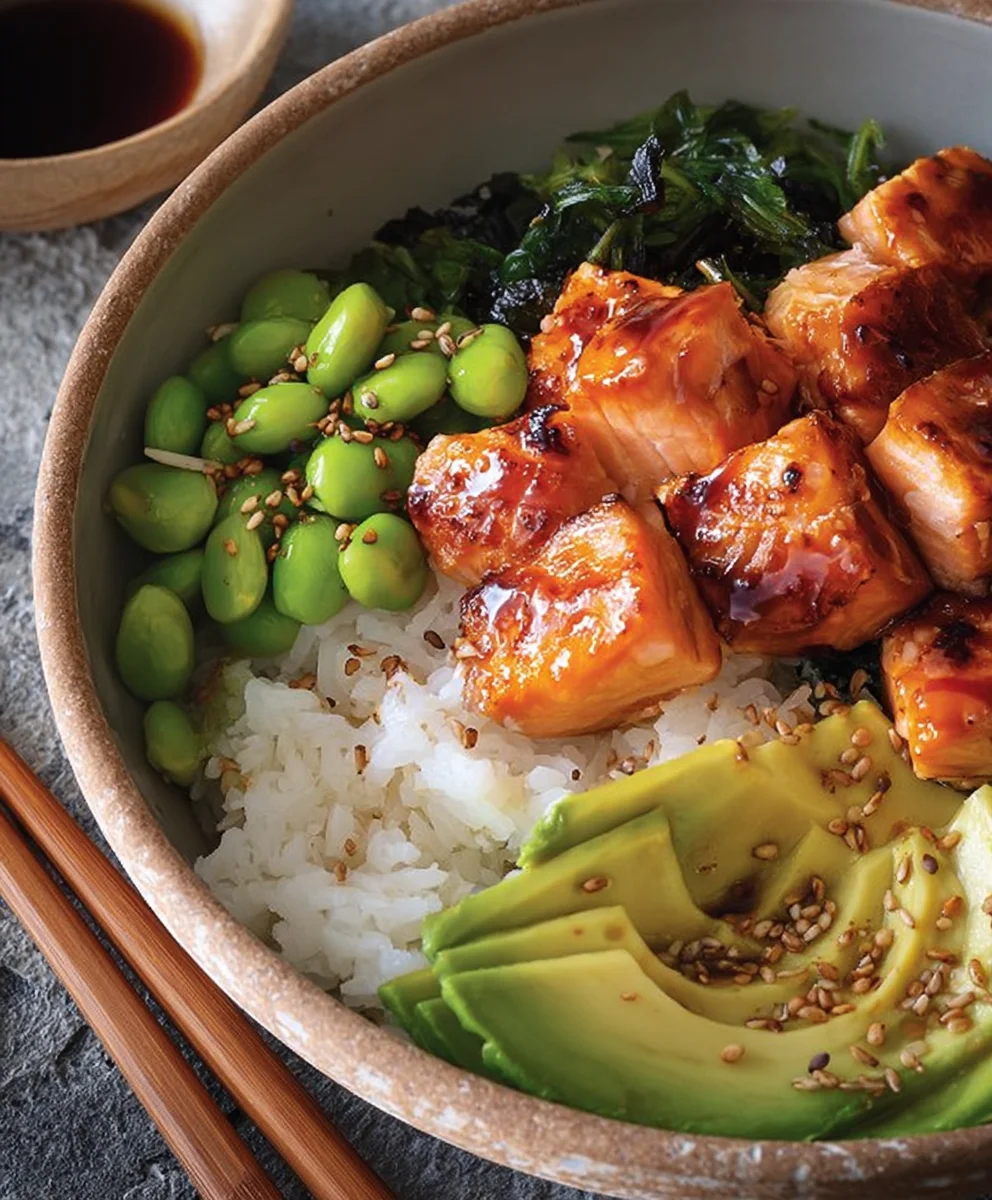
Teriyaki Salmon Sushi Bowl (GF) is more than just a meal; it’s a vibrant explosion of flavor and texture that transports you straight to a Japanese culinary paradise, all within the comfort of your own kitchen. Imagin extracte tender, flaky salmon glazed in a sweet and savory teriyaki sauce, perfectly complemented by the delicate chew of seasoned sushi rice. This dish has captured hearts worldwide because it masterfully balances richness with freshness, offering a satisfying yet light experience. What truly sets our Teriyaki Salmon Sushi Bowl (GF) apart is its delightful harmony of elements: the umami-rich salmon, the tangy gin extractkled ginger, the crisp, refreshing vegetables, and the subtle kick of wasabi, all nestled together in a beautifully presented bowl. Plus, being gluten-free means everyone can indulge in this incredible creation without compromise. Get ready to create a showstopper that’s as pleasing to the eye as it is to the palate.

Ingredients:
- 180g (6.5oz) sushi rice
- 3 tbsp rice vinegar
- 1 tsp caster sugar
- 0.5 tsp fine salt
- 30ml (1fl oz) maple syrup
- 1 tsp sesame oil
- 2 tsp gluten-free tamari soy sauce
- 0.5 tsp garlic granules
- 1 tsp non-non-non-alcoholic alternativeic non-alcoholic mirin
- 2 salmon fillets (approximately 150-180g each, skin on is fine if you prefer to crisp it up)
- 2 tbsp sesame seeds (white or black, or a mix)
- 4 spring onions (also known as scallions)
- 150g (5oz) edamame beans (shelled, fresh or frozen and thawed)
- Half a ripe avocado
Preparing the Sushi Rice
- Begin extract by rinsing the sushi rice thoroughly. Place the 180g of sushi rice in a fine-mesh sieve and rinse it under cold running water. Gently agitate the rice with your hands until the water runs clear. This step is crucial for removing excess starch, which prevents the rice from becoming gummy and ensures a nice, distinct grain. Once rinsed, drain the rice well and set it aside.
- In a small saucepan, combine the 3 tbsp of rice vinegar, 1 tsp of caster sugar, and 0.5 tsp of fine salt. Heat this mixture gently over low heat, stirring constantly, just until the sugar and salt have completely dissolved. Do not let it boil. This seasoned vinegar mixture, often called “sushi-zu,” will be used to flavour the cooked rice, giving it that characteristic sushi rice tang. Remove from the heat and let it cool slightly.
- Cook the sushi rice according to your preferred method. You can use a rice cooker or cook it on the stovetop. If using a stovetop, place the rinsed and drained rice in a saucepan with 200ml of cold water. Bring to a boil, then immediately reduce the heat to the lowest setting, cover tightly, and simmer for 15 minutes. After 15 minutes, remove the saucepan from the heat and let it stand, still covered, for another 10 minutes. This steaming process allows the rice to fully absorb the moisture and become perfectly tender.
- While the rice is still hot, transfer it to a large, shallow bowl, preferably a wooden one if you have it, as it absorbs excess moisture. Gently pour the cooled sushi vinegar mixture evenly over the rice. Using a wooden spoon or spatula, carefully fold and ‘cut’ through the rice, spreading the vinegar mixture and fanning the rice simultaneously. This helps to cool the rice quickly, giving it a glossy appearance and preventing it from clumping. Continue this until all the vinegar is absorbed and the rice is no longer steaming. Cover the seasoned rice with a damp kitchen towel to keep it from drying out while you prepare the other components.
Marinating and Cooking the Salmon
- Now, let’s prepare the delicious teriyaki marinade for our salmon. In a small bowl, whisk together the 30ml of maple syrup, 1 tsp of sesame oil, 2 tsp of gluten-free tamari soy sauce, 0.5 tsp of garlic granules,non-alcoholic alternativetsp of non-non-alcoholic mirinolicolic mirin. This simple yet flavourful marinade will coat the salmon and create a beautiful glaze when cooked.
- Pat the 2 salmon fillets dry with paper towels. This helps to ensure a good sear and allows the marinade to adhere better. Place the salmon fillets in a shallow dish and pour the prepared teriyaki marinade over them, ensuring they are well coated on all sides. Let the salmon marinate for at least 15-20 minutes at room temperature. For a more intense flavour, you can marinate them in the refrigerator for up to 30 minutes, but avoid marinating for too long as the acid in the tamari can start to ‘cook’ the fish.
- Heat a non-stick frying pan or a cast-iron skillet over medium-high heat. Add a tiny splash of neutral cooking oil if your pan isn’t completely non-stick, but often the oil from the marinade and salmon is sufficient. Carefully place the marinated salmon fillets into the hot pan, skin-side down if they have skin. Sear for about 3-4 minutes per side, depending on the thickness of your fillets, until they are cooked through and beautifully caramelized. Baste the salmon with any remaining marinade in the pan during the last minute of cooking. The teriyaki glaze should be sticky and a deep, rich brown. Once cooked, remove the salmon from the pan and set it aside to rest briefly.
Assembling the Teriyaki Salmon Sushi Bowls
- While the salmon is resting, prepare the fresh elements of your bowl. Finely slice the 4 spring onions, separating the white and green parts. The white parts can be sautéed briefly if you prefer a milder flavour, or added raw for a sharper bite. The green parts will add a lovely fresh garnish and a touch of colour. Halve the half ripe avocado and carefully slice it. If your edamame beans are frozen, ensure they are fully thawed according to package instructions.
- Toast the 2 tbsp of sesame seeds. You can do this in a dry small frying pan over medium heat for a few minutes, stirring constantly, until they are lightly golden and fragrant. Be careful, as they can burn quickly! This step adds a wonderful nutty aroma and crunch to the finished dish.
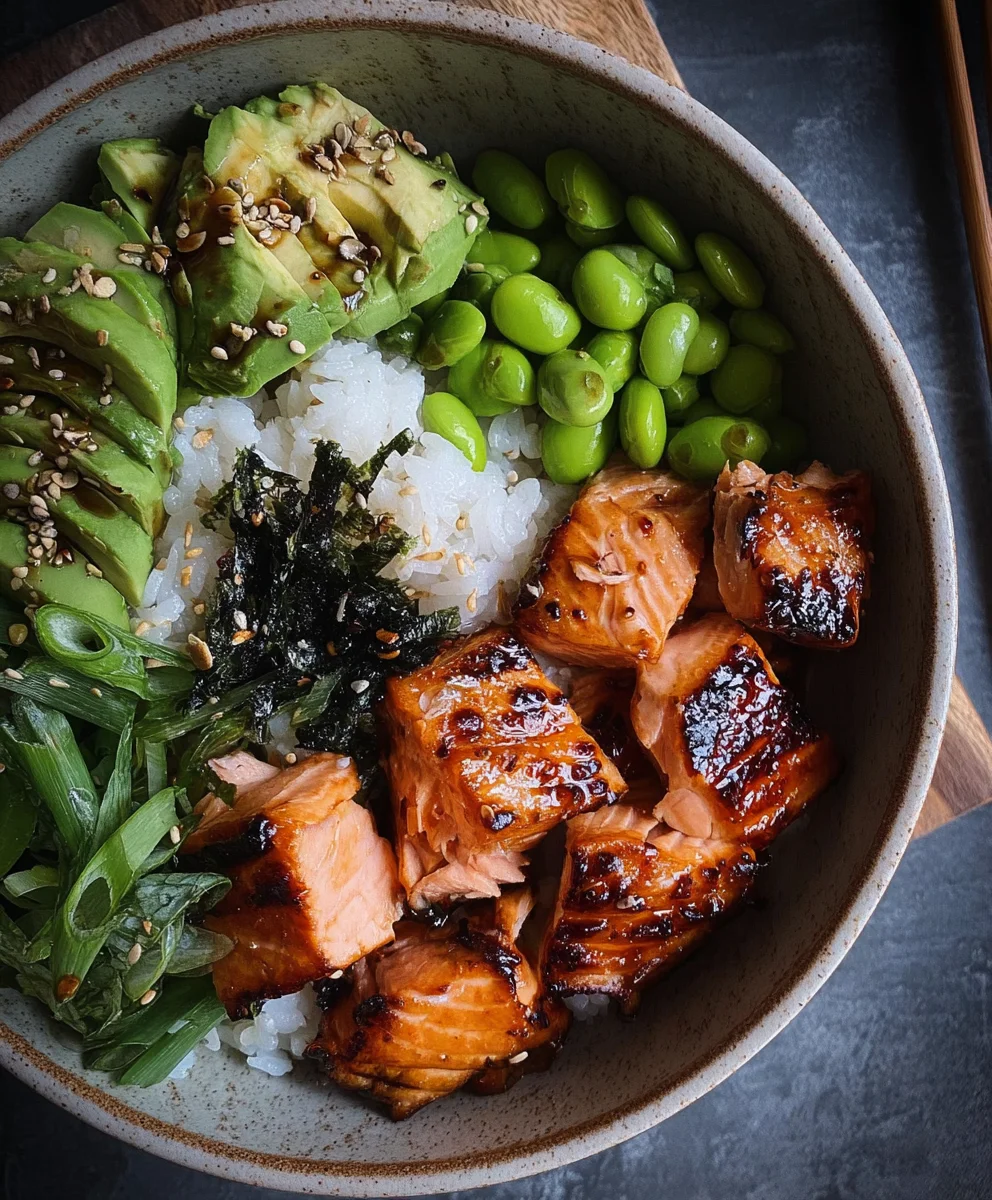
- To assemble your Teriyaki Salmon Sushi Bowls, divide the prepared sushi rice evenly between your serving bowls. Gently flake the rested teriyaki salmon fillets into bite-sized pieces and arrange them on top of the rice. Artfully place the sliced avocado and the edamame beans around the salmon. Scatter the sliced spring onions over the top. Finally, sprinkle generously with the toasted sesame seeds. If you have any leftover teriyaki glaze from the pan, you can drizzle a little over the salmon for extra flavour. Serve immediately and enjoy your delicious, homemade gluten-free sushi bowl!
Conclusion:
And there you have it – a delicious and satisfying Teriyaki Salmon Sushi Bowl (GF) ready to grace your dinner table! This recipe is a fantastic way to enjoy the fresh flavors of sushi in a more approachable and customizable format. We’ve walked through creating the perfect sticky rice, pan-searing flavorful teriyaki salmon, and layering on vibrant toppings. The beauty of the Teriyaki Salmon Sushi Bowl (GF) lies in its adaptability. Feel free to swap out vegetables based on what’s in season or your personal preference. Enjoy it warm for a comforting meal, or let the components cool slightly for a refreshing option. Don’t be afraid to experiment with different sauces or garnishes!
This Teriyaki Salmon Sushi Bowl (GF) is perfect served on its own, making for a complete and balanced meal. For a more substantial experience, consider pairing it with a light side salad dressed with a gin extractger-sesame vinaigrette, or a small bowl of miso soup. It’s a versatile dish that truly shines with its individual components, allowing each flavor to be appreciated.
Frequently Asked Questions about Teriyaki Salmon Sushi Bowl (GF):
Q1: Can I make the Teriyaki Salmon Sushi Bowl (GF) ahead of time?
Yes, you absolutely can! You can prepare the rice and the teriyaki salmon ahead of time and store them separately in airtight containers in the refrigerator. The vegetables can also be prepped. When you’re ready to serve, simply reheat the rice and salmon gently and assemble your bowls. This makes it an excellent option for meal prepping!
Q2: What are some gluten-free teriyaki sauce options?
Many store-bought teriyaki sauces contain gluten. To ensure your Teriyaki Salmon Sushi Bowl (GF) remains gluten-free, look for sauces specifically labeled “gluten-free.” Alternatively, you can easily make your own gluten-free teriyaki sauce at home by combining gluten-free soy sauce or tamari, rice vinegar, honey or maplegin extractrup, ginger, and garlic.
Q3: What other proteins can I use in this bowl?
While salmon is fantastic, this bowl is also delicious with other proteins! Try grilled chicken marinated in teriyaki sauce, pan-seared tofu for a vegetarian option, or even shrimp. Adjust the cooking time accordingly for each protein to ensure it’s cooked through perfectly.
Teriyaki Salmon Sushi Bowl – Delicious GF Recipe
A delicious and easy gluten-free teriyaki salmon sushi bowl recipe with perfectly seasoned sushi rice, glazed salmon, fresh avocado, edamame, and spring onions.
Ingredients
-
180g (6.5oz) sushi rice
-
3 tbsp rice vinegar
-
1 tsp caster sugar
-
0.5 tsp fine salt
-
30ml (1fl oz) maple syrup
-
1 tsp sesame oil
-
2 tsp gluten-free tamari soy sauce
-
0.5 tsp garlic granules
-
1 tsp non-alcoholic mirin
-
2 salmon fillets (approximately 150-180g each)
-
2 tbsp sesame seeds
-
4 spring onions
-
150g (5oz) edamame beans (shelled)
-
Half a ripe avocado
Instructions
-
Step 1
Rinse the sushi rice thoroughly under cold running water until the water runs clear. Drain well and set aside. -
Step 2
In a small saucepan, gently heat rice vinegar, caster sugar, and fine salt until dissolved. Do not boil. Let cool slightly. -
Step 3
Cook sushi rice according to package directions or using the stovetop method (boil 200ml water with rice, simmer 15 mins, rest 10 mins covered). -
Step 4
While rice is hot, transfer to a shallow bowl. Pour seasoned vinegar over rice and gently fold and fan to cool and absorb. Cover with a damp towel. -
Step 5
Whisk together maple syrup, sesame oil, gluten-free tamari, garlic granules, and non-alcoholic mirin for the teriyaki marinade. -
Step 6
Pat salmon fillets dry, marinate in teriyaki mixture for at least 15-20 minutes. -
Step 7
Heat a non-stick pan over medium-high heat. Sear salmon for 3-4 minutes per side until cooked through and caramelized, basting with marinade. -
Step 8
Finely slice spring onions. Slice avocado. Ensure edamame beans are thawed. -
Step 9
Toast sesame seeds in a dry pan until fragrant. -
Step 10
Assemble bowls by dividing rice, flaking salmon over it, and arranging avocado and edamame. Garnish with spring onions and toasted sesame seeds.
Important Information
Nutrition Facts (Per Serving)
It is important to consider this information as approximate and not to use it as definitive health advice.
Allergy Information
Please check ingredients for potential allergens and consult a health professional if in doubt.

Leave a Comment