

Baked German Pancake, often hailed as Dutch baby or Bismarck, is a truly magical breakfast creation that captures the hearts (and stomachs!) of many. There’s something incredibly satisfying about watching a thin batter puff up dramatically in the oven, transforming into a golden, cloud-like masterpiece right before your eyes. People adore this dish for its deceptive simplicity and its impressive presentation. It’s the kind of recipe that makes you feel like a culinary wizard, effortlessly whipping up something elegant and delicious. What truly makes the Baked German Pancake special is its versatility. It’s a blank canvas, ready to be adorned with a bounty of toppings. Imagine it dusted with powdered sugar and a squeeze of fresh lemon for a classic, bright start to your day. Or perhaps piled high with berries and a dollop of whipped cream for a more decadent affair. The delicate, slightly eggy flavor and the wonderfully airy texture are simply irresistible.

Ingredients:
- 3 large eggs
- 1 cup whole milk
- 1 cup all-purpose flour
- 1/2 teaspoon salt
- 1/4 teaspoon ground nutmeg
- 4 tablespoons unsalted butter
- Powdered sugar, for dusting (optional)
- Fresh fruit, such as berries or sliced apples, for serving (optional)
- Maple syrup, for serving (optional)
Preparing the Batter
The foundation of a perfect Baked German Pancake, also known as a Dutch Baby, lies in a simple yet crucial batter. Start by whisking together your eggs in a medium-sized bowl. You want them to be thoroughly combined and slightly frothy. This aeration is key to achieving that signature puffed-up texture. Next, gradually pour in the whole milk, whisking continuously to ensure it’s fully incorporated into the eggs.
Now it’s time for the dry ingredients. In a separate, larger bowl, combine the all-purpose flour, salt, and ground nutmeg. Whisk these together to distribute the salt and nutmeg evenly. The nutmeg, while optional for some, imparts a warm, subtly spiced aroma and flavor that complements the richness of the pancake beautifully.
Create a well in the center of your dry ingredients. Pour the wet egg and milk mixture into this well. Begin whisking gently from the center outwards, gradually incorporating the flour until a smooth batter forms. Be careful not to overmix at this stage. Overmixing can develop the gluten in the flour too much, potentially leading to a tougher pancake. A few small lumps are perfectly acceptable and will likely disappear during baking. The batter should have the consistency of thin pancake batter or heavy cream. Set the batter aside to rest for about 10 to 15 minutes. This resting period allows the flour to hydrate fully, contributing to a tenderer final product.
Preheating the Oven and Skillet
While your batter is resting, it’s time to prepare your oven and your cast-iron skillet, which is highly recommended for its ability to distribute heat evenly and create that desirable crispy edge. Preheat your oven to a hot 450 degrees Fahrenheit (230 degrees Celsius). This high temperature is essential for the dramatic puff of the Baked German Pancake.
Now, place your 10-inch cast-iron skillet into the preheating oven. It needs to get screaming hot to ensure the batter sizzles immediately upon contact, initiating the puffing process. Allowing the skillet to preheat for at least 10 minutes is crucial. This ensures that when you pour the batter into the scorching hot pan, it will begin to cook and rise almost instantaneously. Be extremely cautious when handling the hot skillet; always use thick oven mitts.
Baking the Baked German Pancake
This is where the magic happens! Once the oven and skillet are thoroughly preheated, carefully remove the hot skillet from the oven. It will be very hot, so handle it with extreme care. Immediately add the 4 tablespoons of unsalted butter to the hot skillet. Swirl the skillet gently to coat the bottom and sides with the melting butter. The butter should sizzle and brown slightly, imparting a delicious nutty flavor.
Once the butter has melted and is just starting to foam, give your rested batter one last quick whisk. Then, pour the batter directly into the center of the hot, buttered skillet. You should hear an immediate sizzle as the batter hits the hot butter. The edges of the batter will begin to set almost instantly.
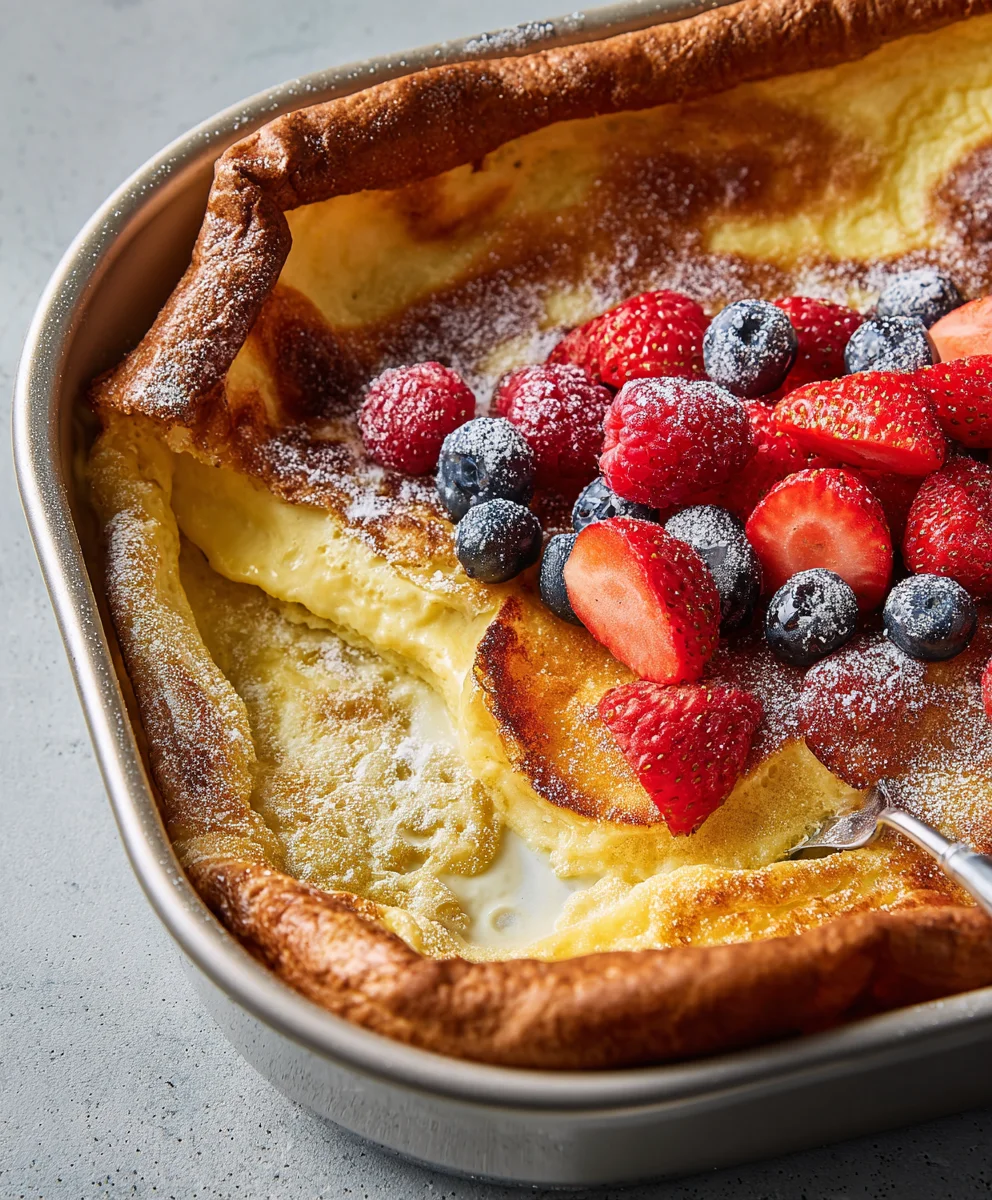
Carefully return the skillet to the preheated oven. Bake for approximately 15 to 20 minutes. During this time, you’ll witness the incredible transformation of your pancake. It will puff up dramatically around the edges, rising high above the rim of the skillet, and develop a beautiful golden-brown color. The center will remain slightly custardy, while the edges will become delightfully crisp. Resist the urge to open the oven door too early, as this can cause the pancake to deflate.
Serving Your Baked German Pancake
As soon as the Baked German Pancake is golden brown and beautifully puffed, carefully remove the skillet from the oven. It will have deflated slightly upon removal, which is completely normal. The characteristic puff is a fleeting moment.
Serve immediately, while it’s still warm and at its most impressive. The beauty of a Baked German Pancake is its versatility. You can enjoy it simply dusted with a light coating of powdered sugar, allowing its natural eggy, buttery flavor to shine. For a touch of sweetness, a drizzle of maple syrup is a classic accompaniment.
For a more elaborate presentation and a burst of freshness, serve it with an assortment of fresh fruits. Berries, such as raspberries, blueberries, and sliced strawberries, add a lovely tartness and vibrant color. Sliced apples, perhaps lightly sautéed with a pinch of cinnamon, also make a delightful topping. The combination of the warm, tender pancake with the bright, fresh fruit is simply divine. This Baked German Pancake is a fantastic option for breakfast, brunch, or even a light dessert. Enjoy every delicious bite!
Conclusion:
There you have it – your guide to creating the most delightful Baked German Pancake! We’ve walked through each step, from preparing your batter to achieving that perfect golden puff. This recipe is truly a joy to make and even more enjoyable to eat. Whether you’re serving it for a special brunch or a simple family breakfast, its impressive presentation and delicious flavor are sure to impress.
For serving suggestions, I love a classic pairing of fresh berries and a dusting of powdered sugar. A drizzle of maple syrup is also a must for many! Don’t be afraid to get creative with variations. Consider adding a touch of cinnamon or nutmeg to the batter for a warm spice note, or perhaps some thinly sliced apples or pears before baking for a fruity twist. You could even add a sprinkle of grated cheese for a savory breakfast option.
I hope you feel inspired and confident to try this wonderful Baked German Pancake recipe for yourself. It’s a forgiving dish and the results are always so rewarding. Enjoy every bite!
Frequently Asked Questions:
Why did my Baked German Pancake not puff up?
Several factors can influence puffing. Ensure your oven is preheated to the correct temperature and that you resist the urge to open the oven door while it’s baking. Also, make sure you’ve whisked your eggs sufficiently to incorporate air, as this contributes to the lift. Using a hot skillet when you pour in the batter can also help initiate a good rise.
Can I make the batter for my Baked German Pancake ahead of time?
Yes, you absolutely can! You can prepare the batter up to 24 hours in advance and store it covered in the refrigerator. Just give it a good whisk before pouring it into your hot, buttered pan, as it may separate slightly. This makes it a fantastic option for busy mornings.
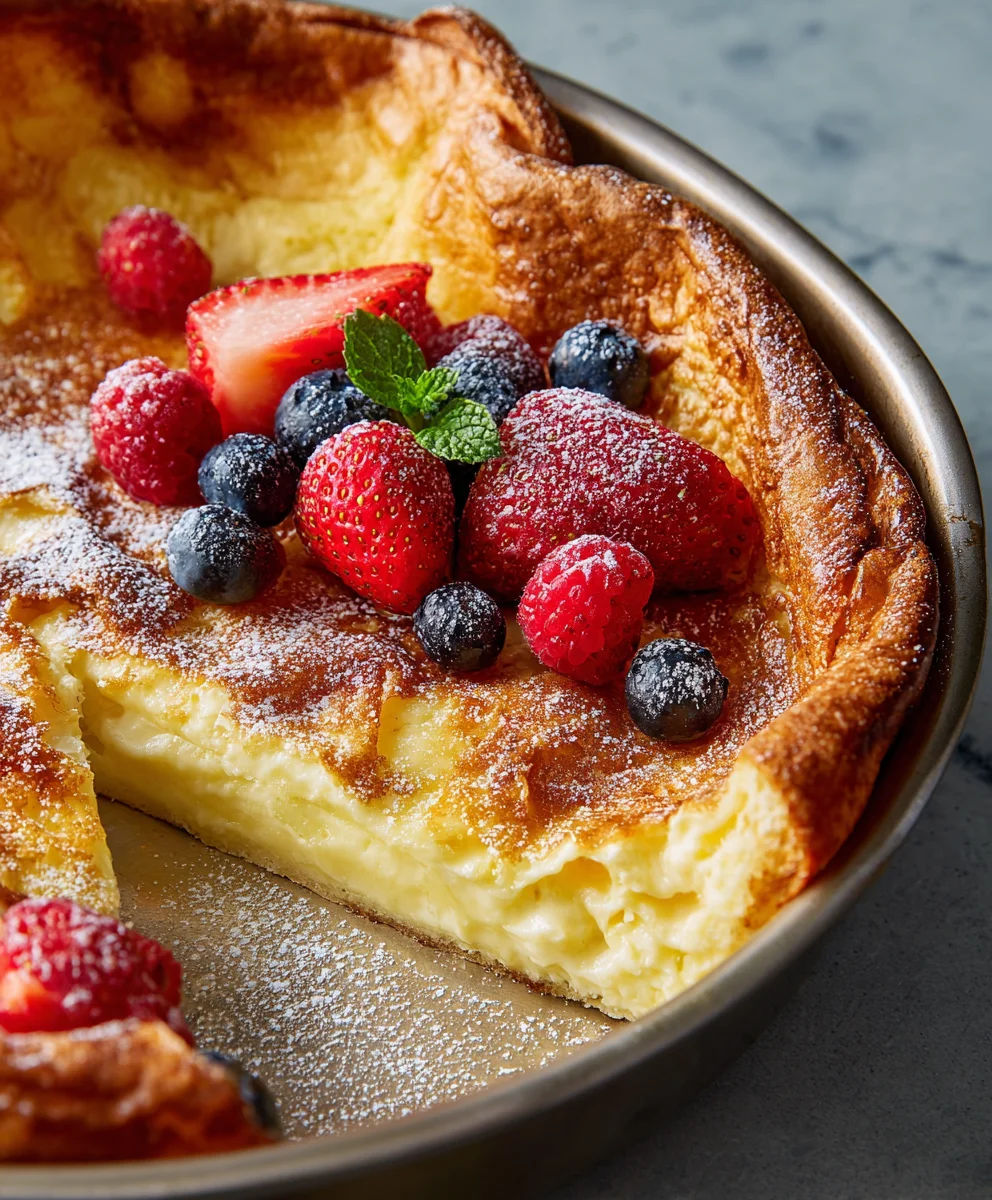
Fluffy Baked German Pancake – Easy & Delicious
A simple and delicious recipe for a fluffy baked German pancake, also known as a Dutch Baby, that puffs up dramatically in the oven and is perfect for breakfast, brunch, or dessert.
Ingredients
-
3 large eggs
-
1 cup whole milk
-
1 cup all-purpose flour
-
1/2 teaspoon salt
-
1/4 teaspoon ground nutmeg
-
4 tablespoons unsalted butter
-
Powdered sugar, for dusting (optional)
-
Fresh fruit, such as berries or sliced apples, for serving (optional)
-
Maple syrup, for serving (optional)
Instructions
-
Step 1
Prepare the batter: Whisk together 3 large eggs in a medium bowl until frothy. Gradually whisk in 1 cup whole milk. In a separate bowl, combine 1 cup all-purpose flour, 1/2 teaspoon salt, and 1/4 teaspoon ground nutmeg. Make a well in the dry ingredients, pour in the wet mixture, and whisk gently from the center outwards until a smooth batter forms. Avoid overmixing. Let the batter rest for 10-15 minutes. -
Step 2
Preheat oven and skillet: Preheat your oven to 450°F (230°C). Place a 10-inch cast-iron skillet in the preheating oven for at least 10 minutes to get it screaming hot. -
Step 3
Melt butter in the hot skillet: Carefully remove the hot skillet from the oven. Add 4 tablespoons of unsalted butter and swirl to coat the bottom and sides. The butter should sizzle and brown slightly. -
Step 4
Pour and bake: Give the rested batter a quick whisk and pour it into the center of the hot, buttered skillet. Immediately return the skillet to the preheated oven. -
Step 5
Bake for 15-20 minutes, or until the pancake is dramatically puffed and golden brown around the edges. The center will remain slightly custardy. Do not open the oven door during baking. -
Step 6
Serve immediately: Carefully remove the skillet from the oven. The pancake will have deflated slightly. Serve warm, dusted with powdered sugar, drizzled with maple syrup, or topped with fresh fruit like berries or sliced apples.
Important Information
Nutrition Facts (Per Serving)
It is important to consider this information as approximate and not to use it as definitive health advice.
Allergy Information
Please check ingredients for potential allergens and consult a health professional if in doubt.


Leave a Comment